
Every three years, the International Union of Architects holds the profession’s largest gathering to ask a single question on a planetary scale. In 2026, that question came to Barcelona under a deceptively simple title: Becoming. Architectures for a Planet in Transition.
OTIIMA was proud to be part of the Congress, contributing to the conversation about building solutions and the future of architecture.
A Congress Built for Changing World
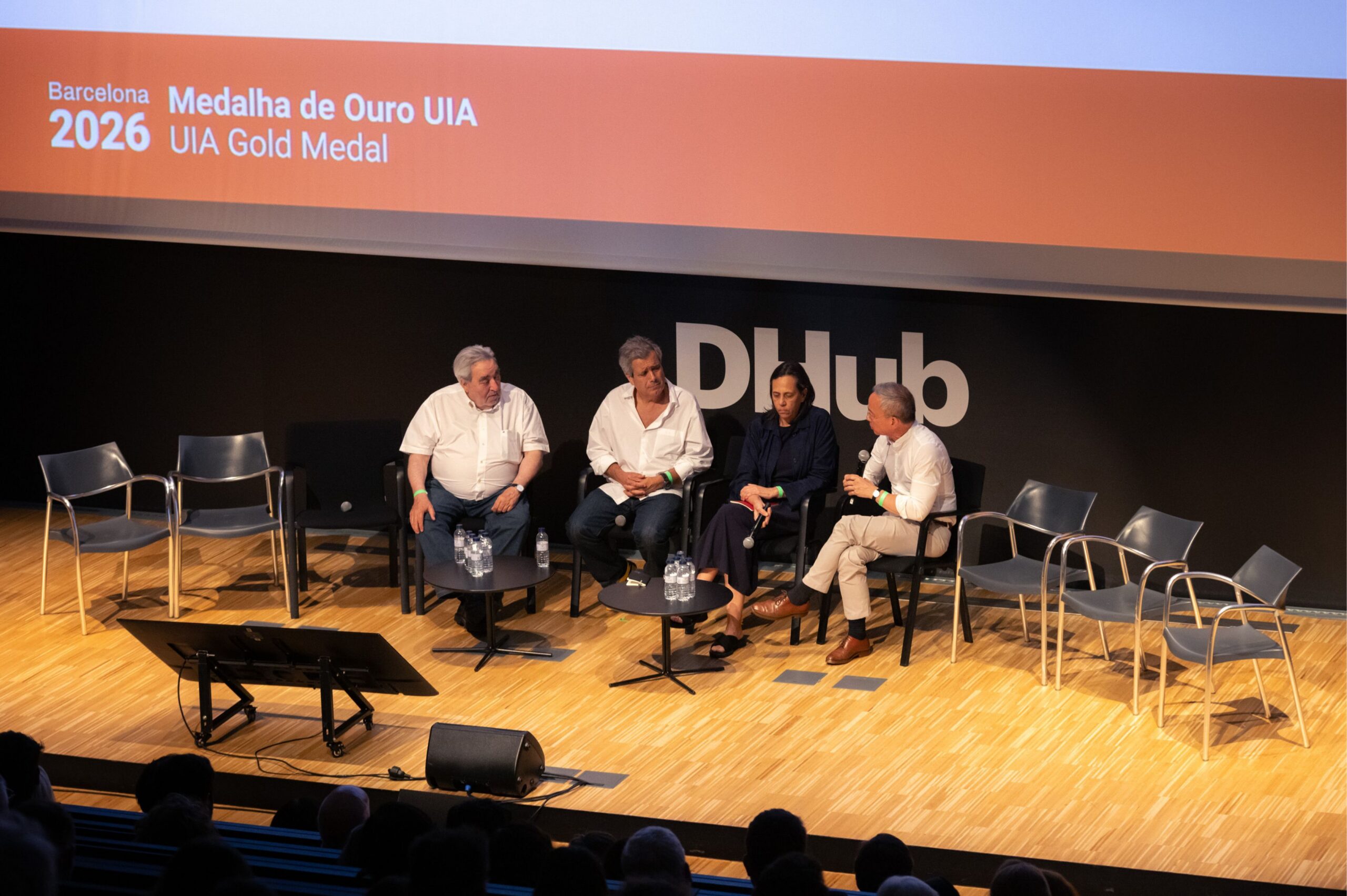
Held from June 28 to July 2 at the CCIB, the former power station Three Chimneys in Sant Adrià de Besòs, and Disseny Hub Barcelona, the Congress gathered over 10,000 professionals from more than 130 countries. With approximately 250 speakers across 100 sessions, it was one of the decade’s most significant architectural events. However, its ambition extended beyond scale.
Barcelona’s selection as UIA World Capital of Architecture 2026 was intentional. Three decades after last hosting the Congress, the city served as a case study to address tourism pressure, housing scarcity, and climate adaptation. These challenges reflect many of the global issues featured in the program.
© Casa da Arquitetura/Laura Van Severen
Six Ways of Becoming
The Congress structured its inquiry into six thematic lines, each addressing a distinct facet of transition: Becoming More-than-human (ecology and ecosystems), Becoming Circular (material reuse and building life cycles), Becoming Embodied (materials and construction technologies), Becoming Interdependent (housing, public space, and spatial policy), Becoming Hyper-conscious (data, geopolitics, and legislation), and Becoming Attuned (poetics, aesthetics, and culture).
As the curatorial team explained before the opening, architecture focuses on specifics such as material selection, demolition or preservation, and resource consumption. These detailed, often overlooked decisions have significant planetary impacts. This perspective aligns with our approach at OTIIMA: while a window system or thermal break may seem minor, when repeated throughout a building or city, it carries substantial environmental and social consequences.
The central exhibition, held in the turbine hall at Three Chimneys, translated these six themes into a 4,000-square-meter display. It featured research commissions and contributions from Congress speakers on topics such as water scarcity, circular construction, and the atmospheric qualities of space.
A Portuguese Presence on a Global Stage
Representing Portugal’s architecture and construction sector at an event of this scale is a significant responsibility, and OTIIMA was proud to share it with AICEP and the Ordem dos Arquitectos. Events like this allow national industries to engage in global dialogue, not only by showcasing products but also by demonstrating how their approaches to building performance, material innovation, and design culture address key questions within the profession.
Souto de Moura at the Sagrada Família
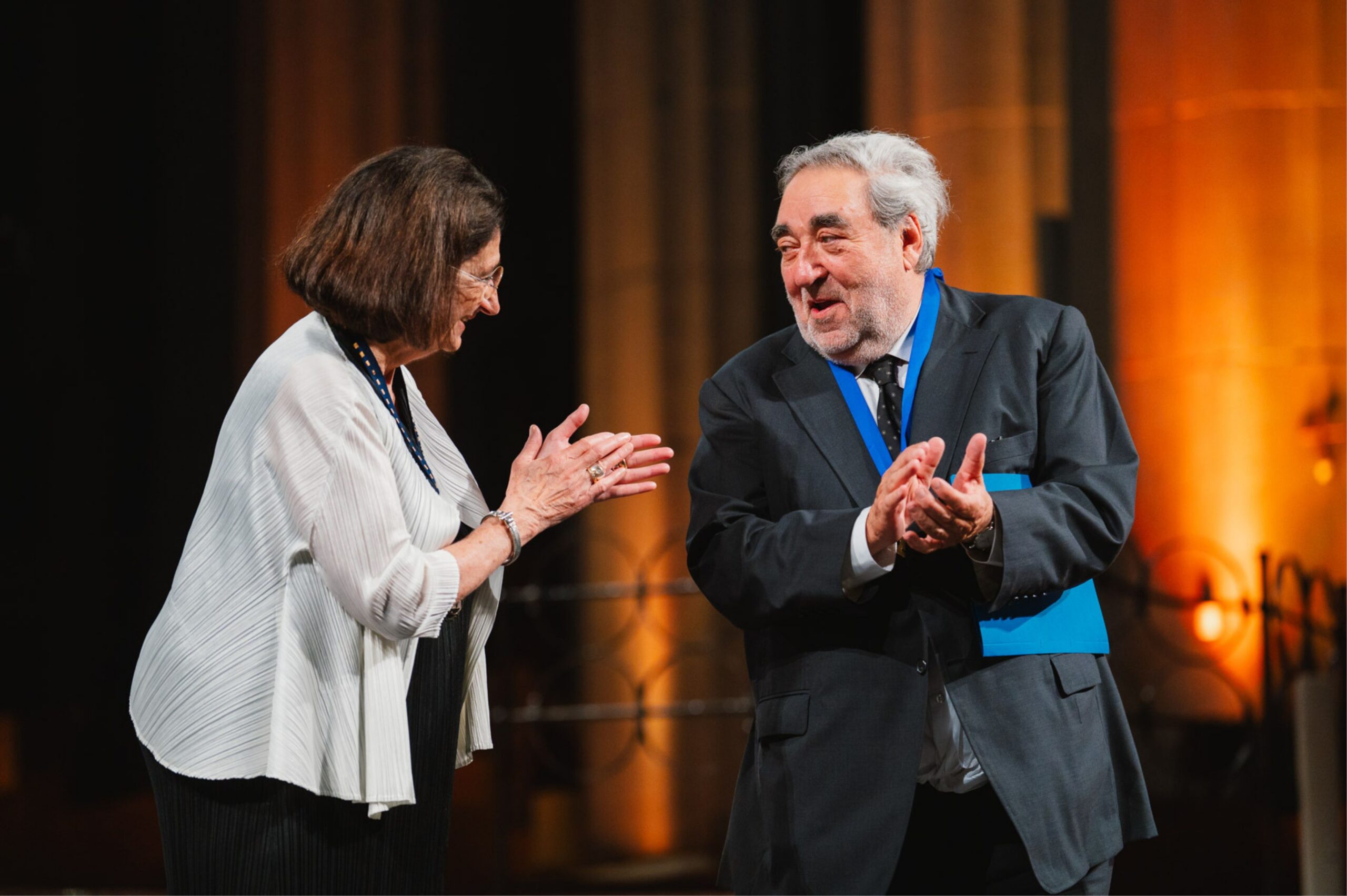
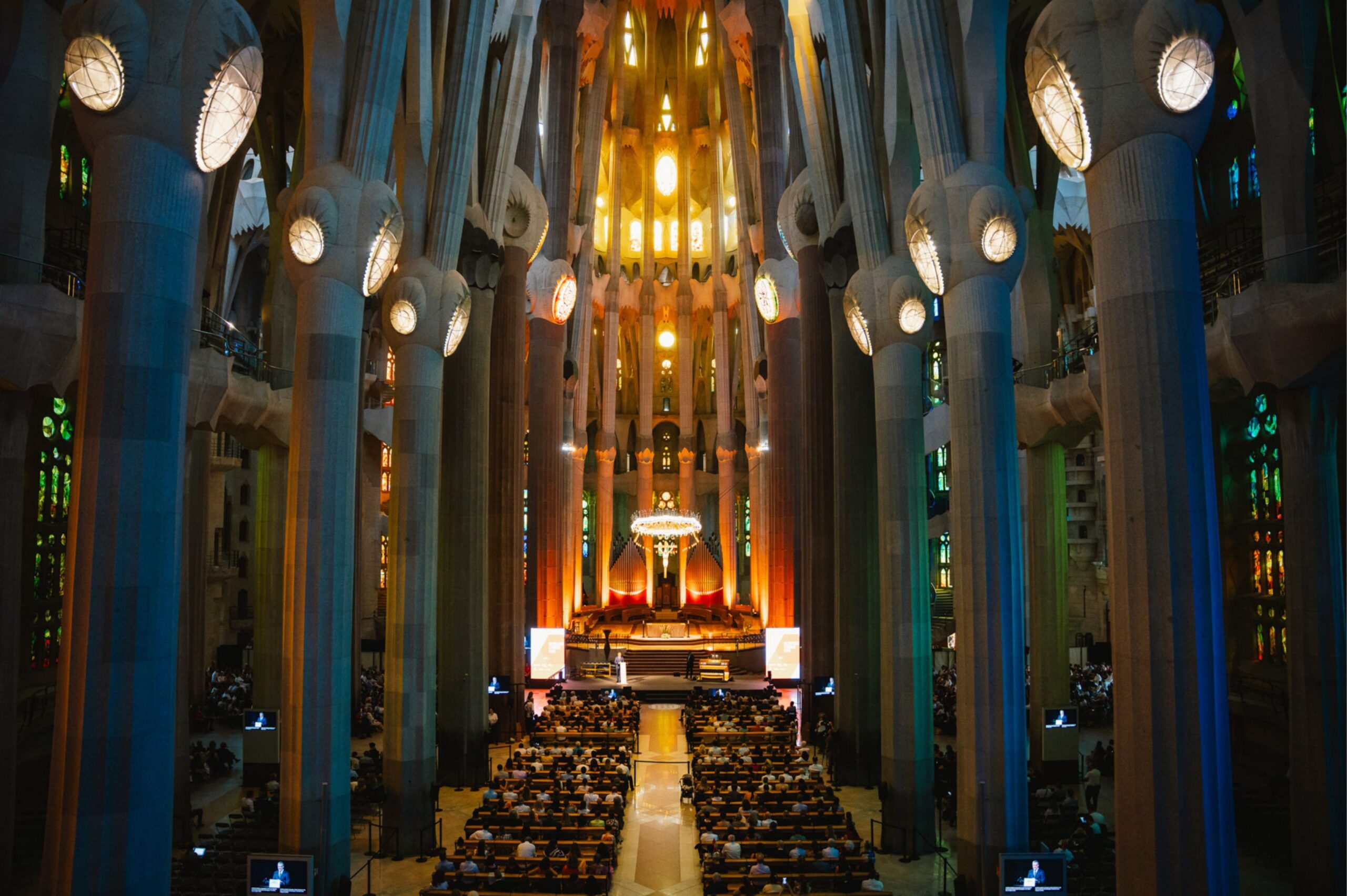
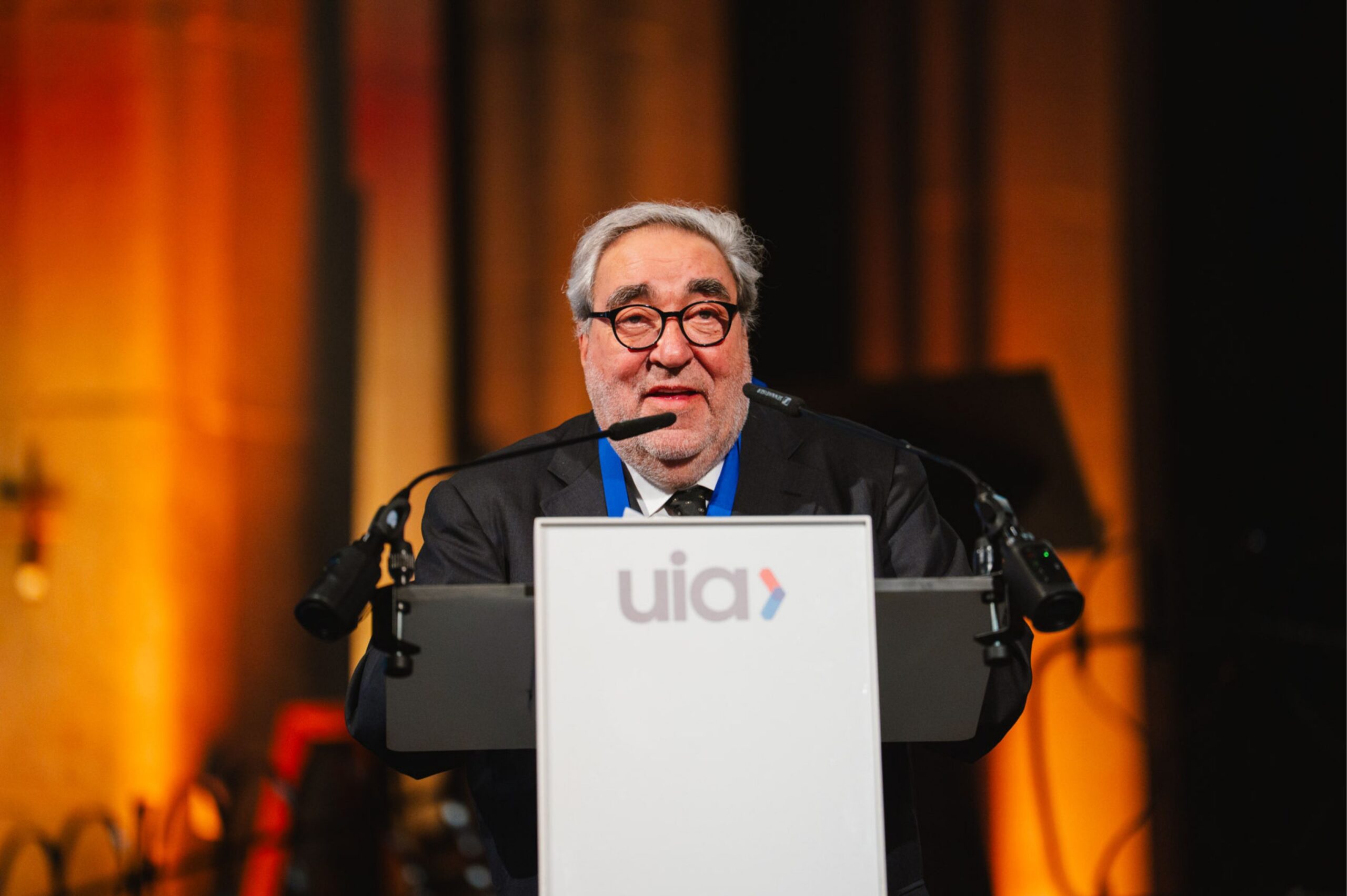
Among the Congress’s defining moments was the presentation of the UIA Gold Medal — the institution’s highest distinction — to Eduardo Souto de Moura, held at the Sagrada Família. It was a fitting setting: one of architecture’s most singular, unfinished, generational projects hosting the recognition of a career that has spent decades quietly redefining what restraint, material honesty, and contextual sensitivity can achieve. Souto de Moura’s impact on contemporary practice in Portugal and beyond continues to shape the thinking of generations of architects
© Casa da Arquitetura/Laura Van Severen
Looking ahead
Congresses of this scale rarely produce consensus, nor was that the goal here. Instead, this event established a shared vocabulary—six terms describing the pressures reshaping architecture—and highlighted that the profession’s transition is tangible, procedural, and already visible in current design and manufacturing decisions.
We sincerely thank AICEP and the Ordem dos Arquitectos for their collaboration and for the opportunity to represent Portugal at one of the world’s leading architectural events.
© Casa da Arquitetura/Laura Van Severen


