

Glass has become one of the most technical materials in residential architecture. What once was a simple opening in a wall now regulates heat, filters sound, manages daylight, and carries structural loads across spans unthinkable a generation ago. For architects and homeowners building premium residences, choosing architectural glass is an early performance decision with consequences that last the life of the building.
Choosing well means understanding what each type of glass actually does and matching that function to the specific demands of the site, climate, and design intent.
Choose the Right Glass Early in the Design Process
In luxury residential projects, glazing is frequently the largest single surface on the building envelope. Floor-to-ceiling openings, sliding walls, and corner windows without visible framing place enormous performance demands on a single pane or, more accurately, on a carefully engineered glass assembly.
Getting the specification wrong is expensive to fix later. Getting it right early lets the glass stabilize indoor temperature, reduce HVAC loads, control noise from nearby roads or coastlines, and protect interiors from UV degradation, all without interrupting the view the design was built around.
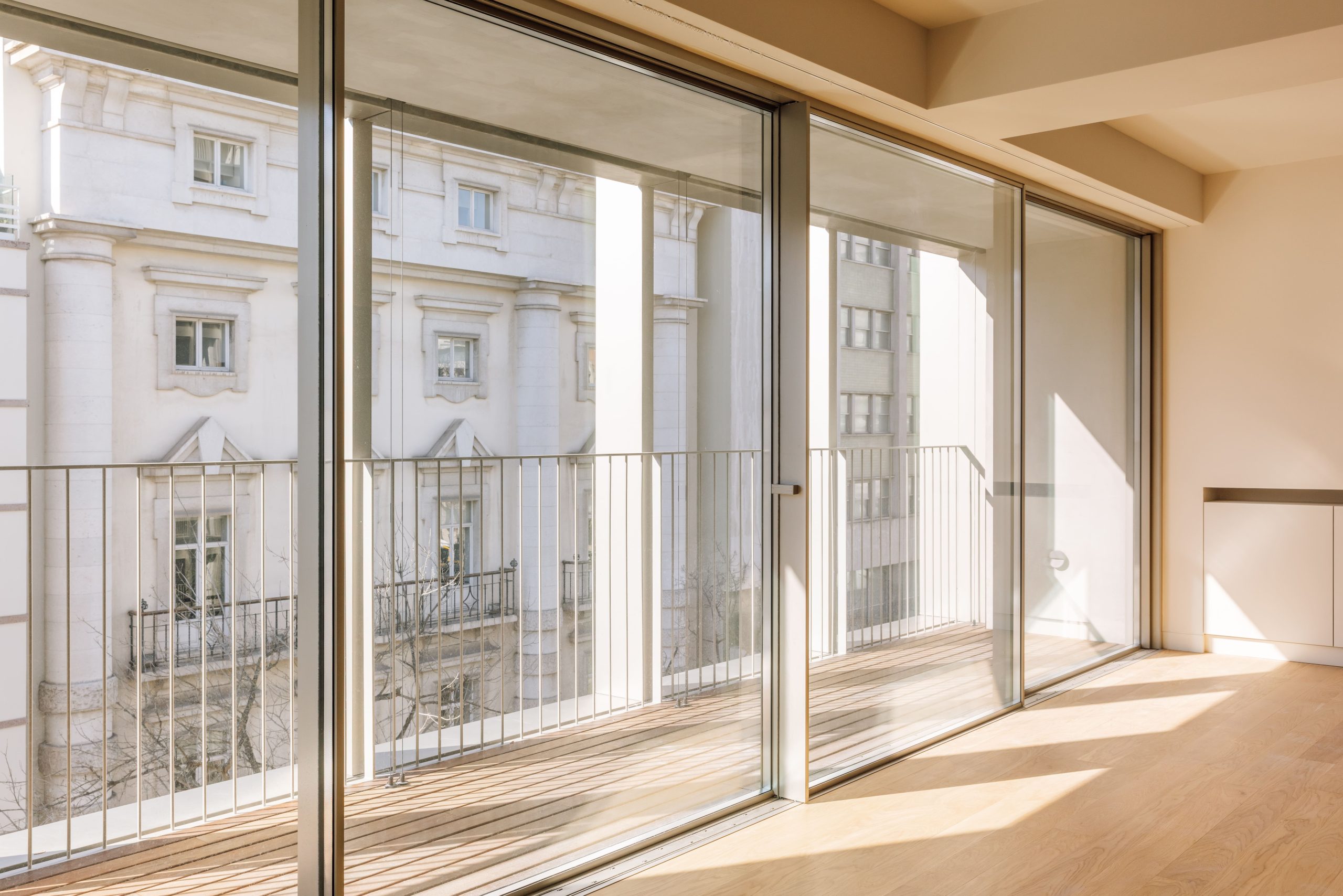
Bow | Ana Costa | © Francisco Nogueira
The Core Categories of Architectural Glass
Float Glass
The base material for nearly every glazing application. Float glass is valued for its optical clarity and flatness but offers limited thermal or acoustic performance on its own. In residential settings, it serves as the starting point for more complex assemblies.
Tempered Glass
Heat-treated for strength, tempered glass breaks into small, blunt fragments. This is why building codes require it at floor level, near stairs, and in large panes. For sliding doors and expansive openings, a signature move in contemporary residential design, tempered glass is a baseline safety requirement, not an upgrade.
Laminated Glass
Two or more layers bonded with an interlayer (typically PVB), laminated glass holds together when broken instead of falling away. Beyond security, the interlayer also provides acoustic and UV performance, making laminated glass the standard choice for street-facing façades, waterfront homes exposed to wind noise, and any opening where sound insulation matters as much as the view.
Insulated Glass Units (IGUs)
Two or more panes separated by a sealed gas-filled cavity, IGUs are the backbone of high-performance envelopes. The cavity, usually filled with argon or krypton, dramatically reduces heat transfer compared to single glazing. Triple-glazed IGUs improve performance further but add weight and thickness that must be planned for in the frame and sliding-system design from the start.
Low-E (Low-Emissivity) Coatings
A microscopically thin metallic coating applied to one or more glass surfaces, Low-E glass reflects infrared heat while letting visible light through. Depending on the coating’s placement and formulation, it can be tuned to keep interior heat in during cold months or keep solar heat out during warm ones. This is a critical distinction for homes in climates with strong seasonal swings.
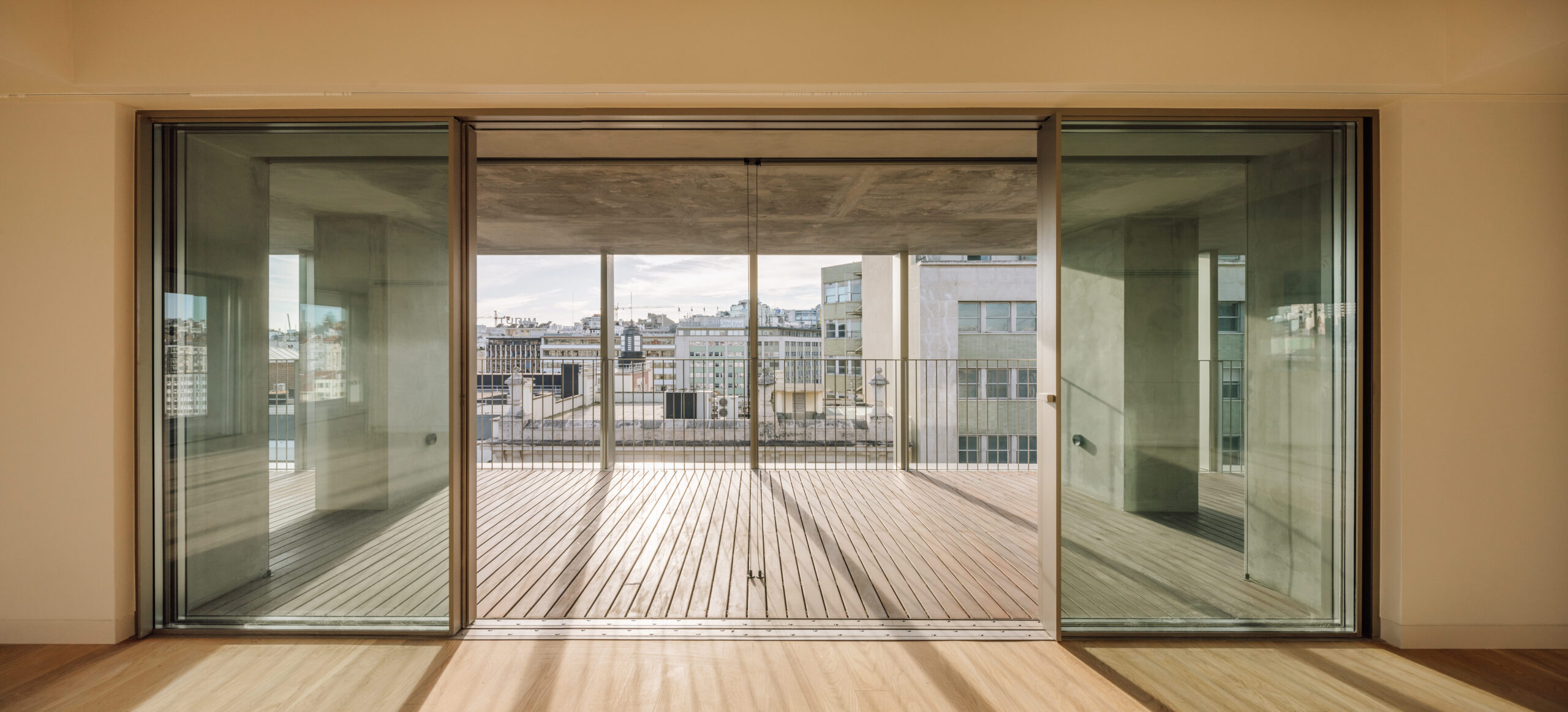
Bow | Ana Costa | © Francisco Nogueira
The Impact of Glass on Residential Performance
Thermal performance. Glazing is usually the weakest thermal link in a building envelope. IGUs with Low-E coatings and inert-gas fills reduce U-values substantially compared to single or standard double glazing, lowering heating and cooling costs over the home’s life.
Acoustic comfort. For residences near airports, arterial roads, or dense urban centers, laminated glass with an acoustic-grade interlayer often combined with asymmetric pane thicknesses within an IGU meaningfully reduces sound transmission without adding visible bulk to the frame.
Solar control. In sun-intensive climates, high-performance coatings manage solar heat gain without darkening the glass or distorting color, preserving the neutral high-clarity look that defines contemporary residential architecture.
Structural spans. Large-format sliding and pivoting systems require glass to carry structural weight. Laminated and tempered configurations engineered with the framing system determine how far a wall can open without intermediate supports interrupting the sightline.
Safety and code compliance. Tempered and laminated glass aren’t optional extras near floor level, on staircases, or in large panes — they’re the mechanisms that make expansive glazing legally and practically viable in a residential setting.
Integrating Glass and Window System Design
Glass should never be considered independently of the window system.
The performance of a glazed opening depends on the interaction of:
Glass + Frame + Hardware + Installation
A high-performance glass unit cannot compensate for an inadequate frame or poor installation.
This is especially important in minimalist residential architecture, where the goal is often to combine large glass areas with minimal visible framing.
As the frame becomes less visible, the performance demands on the entire system increase.

Miramar Tower | OODA | © Fernando Guerra
Frequently Asked Questions
What is the best architectural glass for a luxury home?
What type of glass is best for floor-to-ceiling windows?
Is double or triple glazing better for residential projects?
Does architectural glass improve energy efficiency?
Can architectural glass improve acoustic comfort?
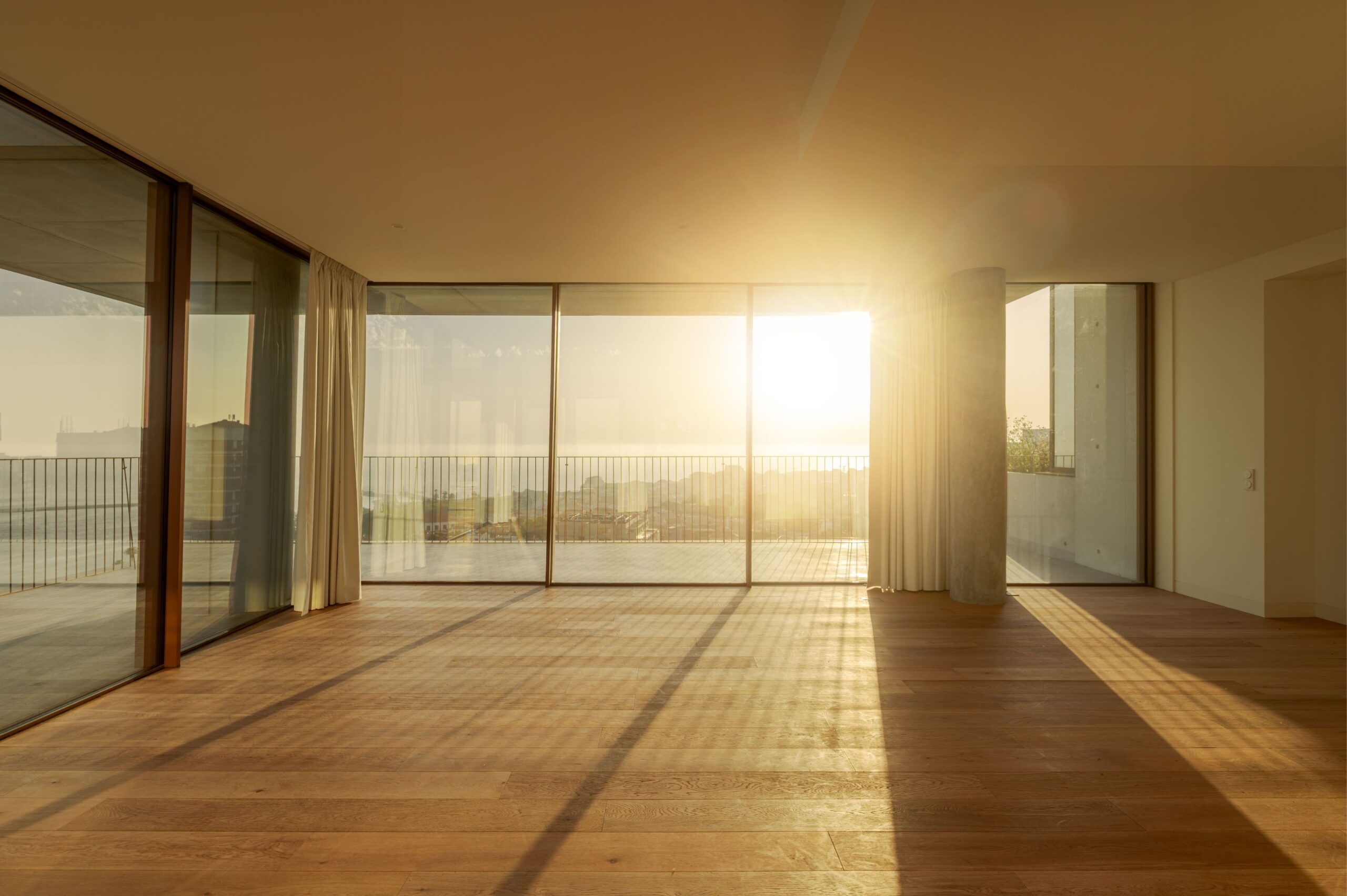
Miramar Tower | OODA | © Fernando Guerra
The Role of Glass in High-Performance Residential Glazing
The most compelling residential architecture increasingly treats glass as invisible infrastructure: present everywhere, noticed nowhere. This effect works only when the specification is right. A frameless corner window or a wall-height sliding door looks effortless in a finished photograph, but behind it lies a deliberate stack of decisions: pane count, coating, interlayer, gas fill, and structural calculation, all tuned to the specific site and climate.
Residential glazing shapes how a home feels in every season: quiet, temperate, and open, without the comfort trade-offs that once came with large glass expanses. For architects specifying glass for luxury homes and the manufacturers and systems that support them, that combination—performance that disappears into the space experience—is where the real value of high-performance glass lies.


