
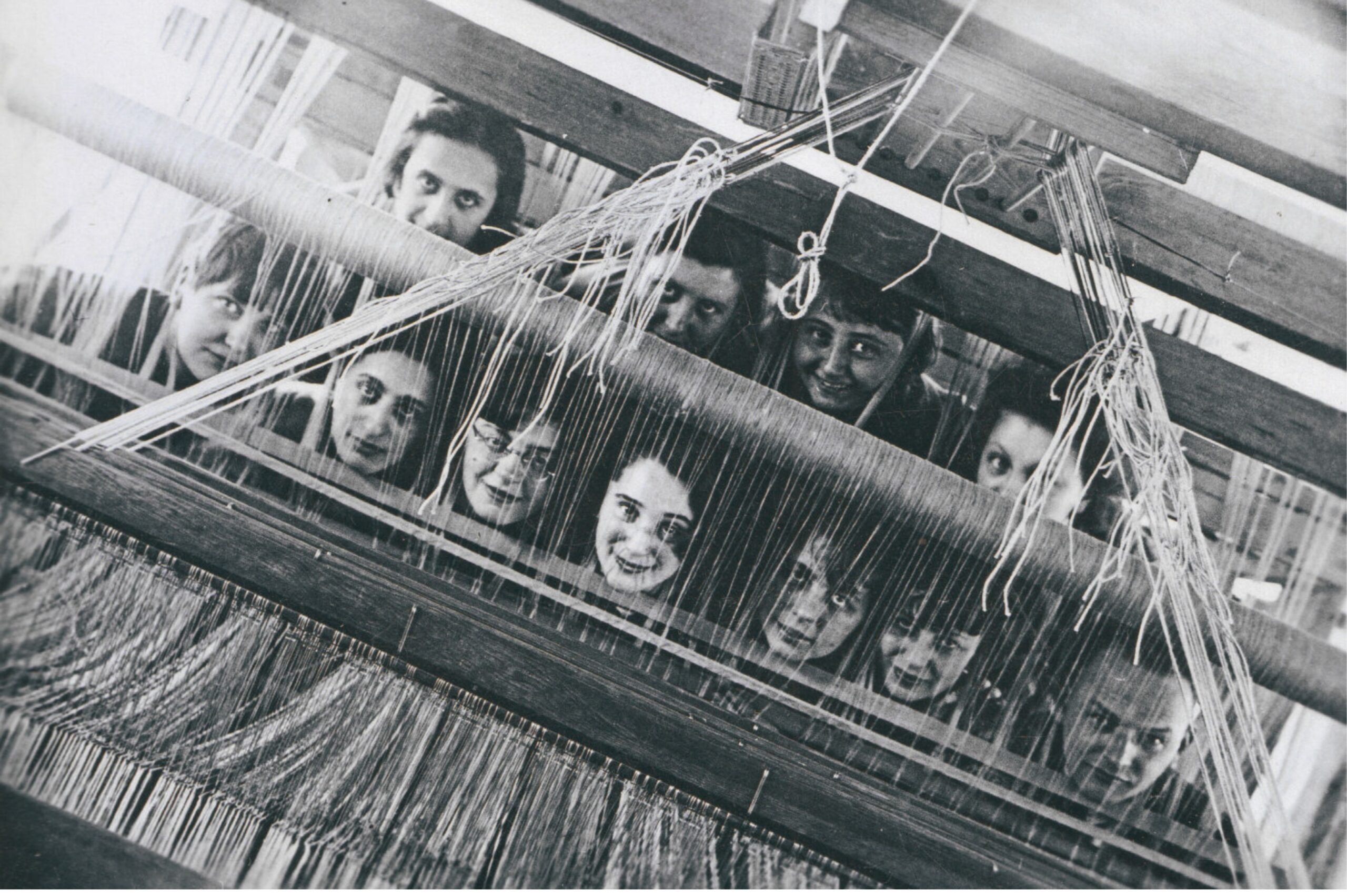
Over a century after its founding, the Bauhaus still influences how we think about design, architecture, and the built environment. Its legacy is everywhere: in clean lines, purposeful form, and the radical idea that beauty and function are inseparable.
But there’s a story within that story that rarely gets told the way it deserves.
The women of the Bauhaus didn’t just attend one of the most progressive schools of the 20th century. They helped define it, even as the institution itself offered a certain resistance along the way.
The Fine Print of Quality
When Walter Gropius opened the Bauhaus in Weimar in 1919, the school declared itself open to all, regardless of gender. It was a bold statement for the time. Women enrolled in significant numbers, drawn by the promise of a new kind of education that treated art, craft, and design as equals.
The reality, however, was more complicated.
Most women were quietly steered toward the weaving workshop, which was considered “feminine,” less prestigious, and far removed from the architecture and industrial design tracks that carried the most cultural weight. It wasn’t written policy. It was structural bias, enforced through subtle discouragement and institutional gatekeeping.
What happened next says everything about the women who refused to accept that framing.
Anni Albers: Weaving as Architecture
If the Bauhaus establishment thought the weaving workshop was a consolation prize, Anni Albers transformed it into one of the school’s most forward-thinking laboratories.
Her textiles were structural explorations of material, sound absorption, light, and tactile experience that anticipated the concerns of contemporary interior architecture. Her work on acoustically functional wall hangings for trade union buildings was, in essence, applied design research.
Albers went on to become one of the first textile artists to have a solo exhibition at MoMA. Her thinking about the surface as a designed system—not an afterthought—remains profoundly relevant to how we approach material specification in luxury interiors today.
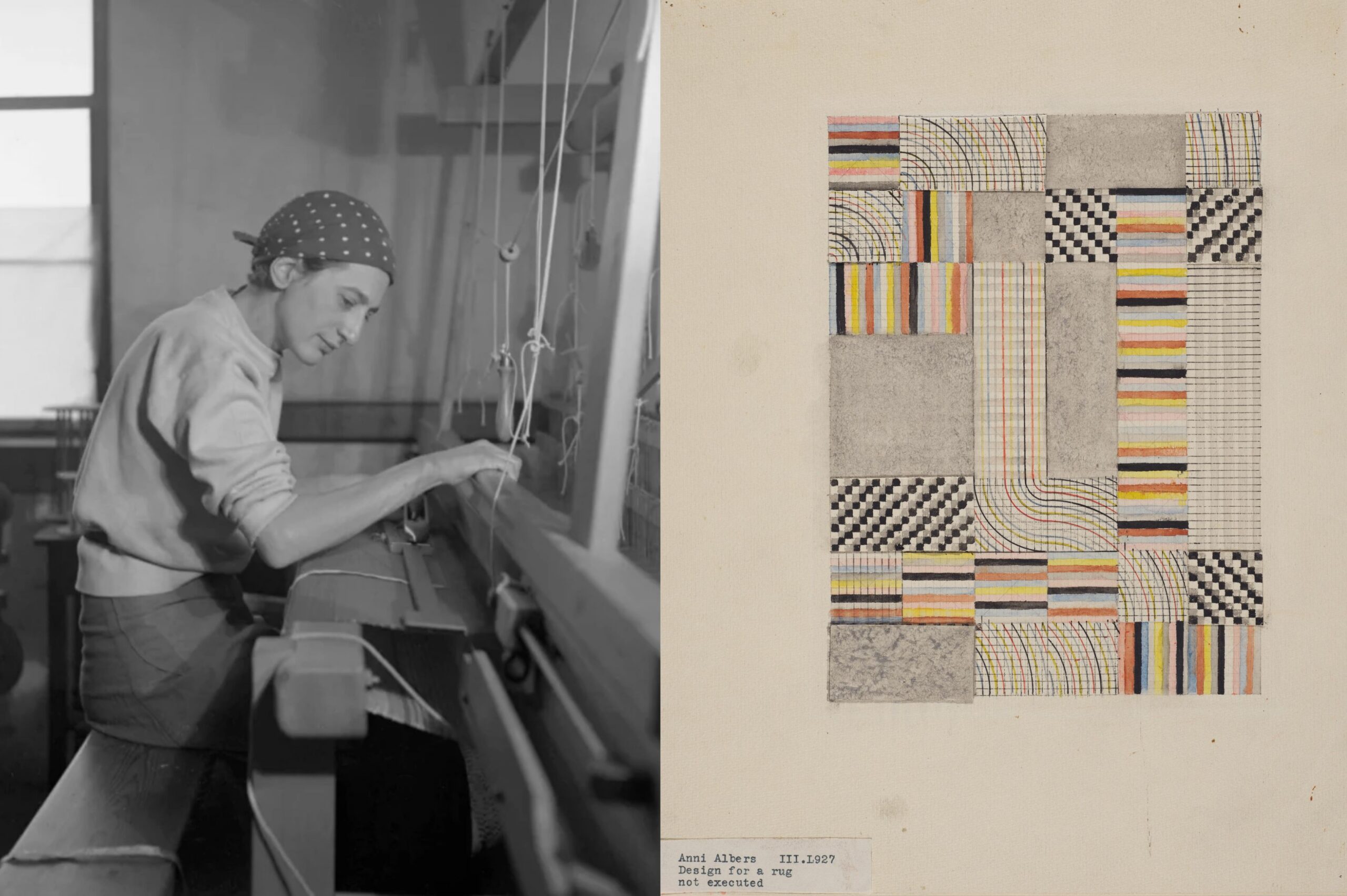
Annie Albers | 1- Josef & Anni Albers Foundation 2- Art is a word, Public domain, via Wikimedia Commons
Gunta Stölzl: The One Who Led
Gunta Stölzl became the only woman to hold the title of Bauhaus Master, eventually directing the weaving workshop itself.
Her approach to textiles was architectural in sensibility: rigorous, analytical, and concerned with how materials perform in space. She introduced Jacquard loom techniques to the school and pushed her students to think beyond pattern and toward structure.
In a school populated by celebrated male masters, Stölzl’s achievement remains extraordinary and still underrecognized.
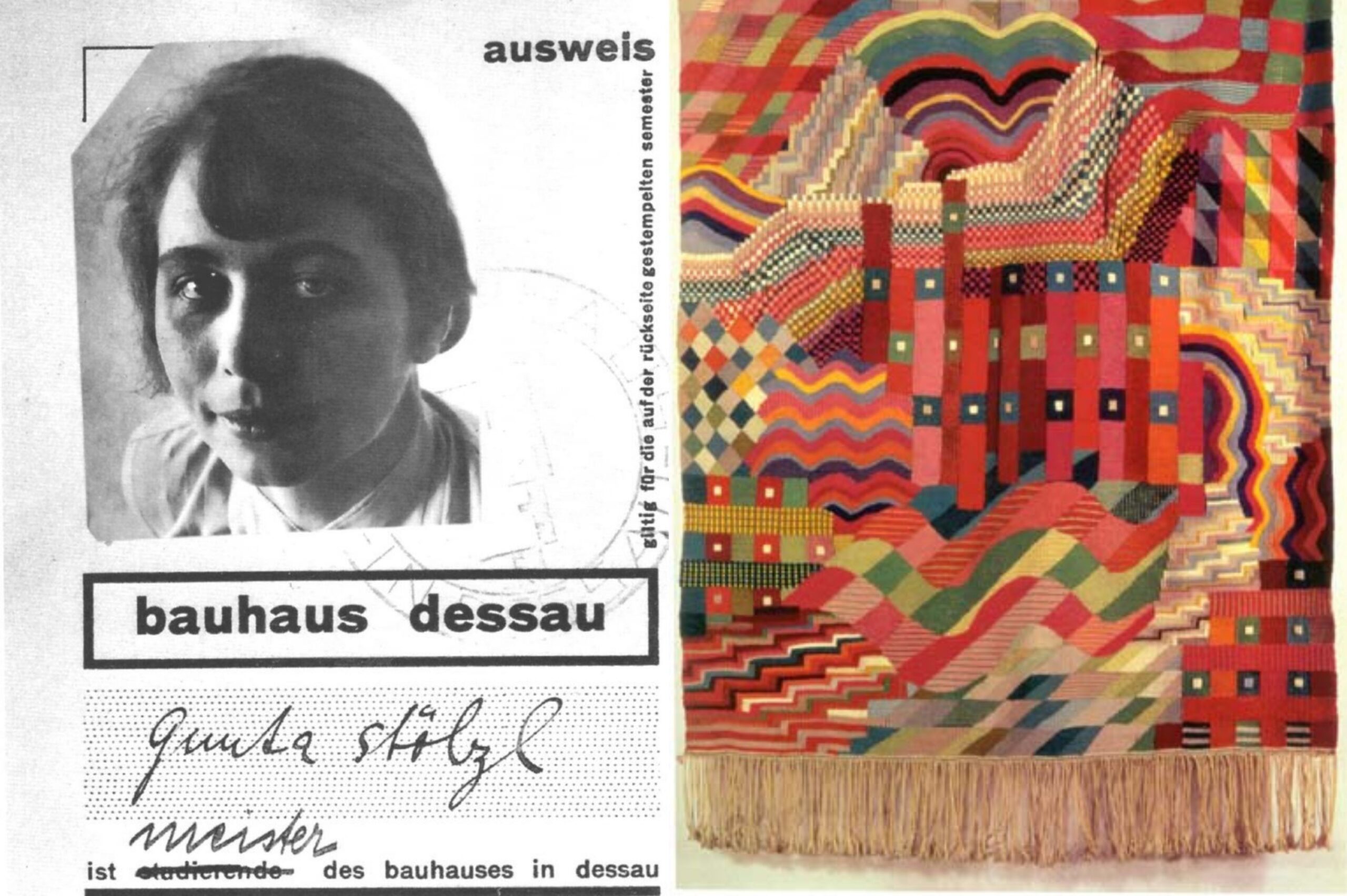
ID card of Gunta Stölzl from the Bauhaus, with the word "student" crossed out and the word "master" written in & "Slit Tapestry Red/Green" by Gunta Stölzl | 1- via Wikimedia License Under Public Domain. Image 2- Jennifer Mei, CC BY 2.0 , via Wikimedia Commons
Lilly Reich: The Collaborator Who Wasn’t Just a Collaborator
Lilly Reich never enrolled at the Bauhaus. She came to it through her professional partnership with Ludwig Mies van der Rohe, and their collaboration produced some of the most iconic design work of the 20th century.
The Barcelona Pavilion. The Tugendhat House. The Barcelona Chair.
For decades, these were cataloged almost exclusively under Mies’s name. Scholarship in recent years has worked to restore what many design historians now acknowledge: Reich’s contribution to the spatial and material decisions in these projects was substantial.
She was a skilled and independent designer in her own right, with a precise understanding of how fabric, color, and material transform the experience of a space. That her legacy was absorbed into someone else’s is a pattern repeated across the careers of many women in modernism.
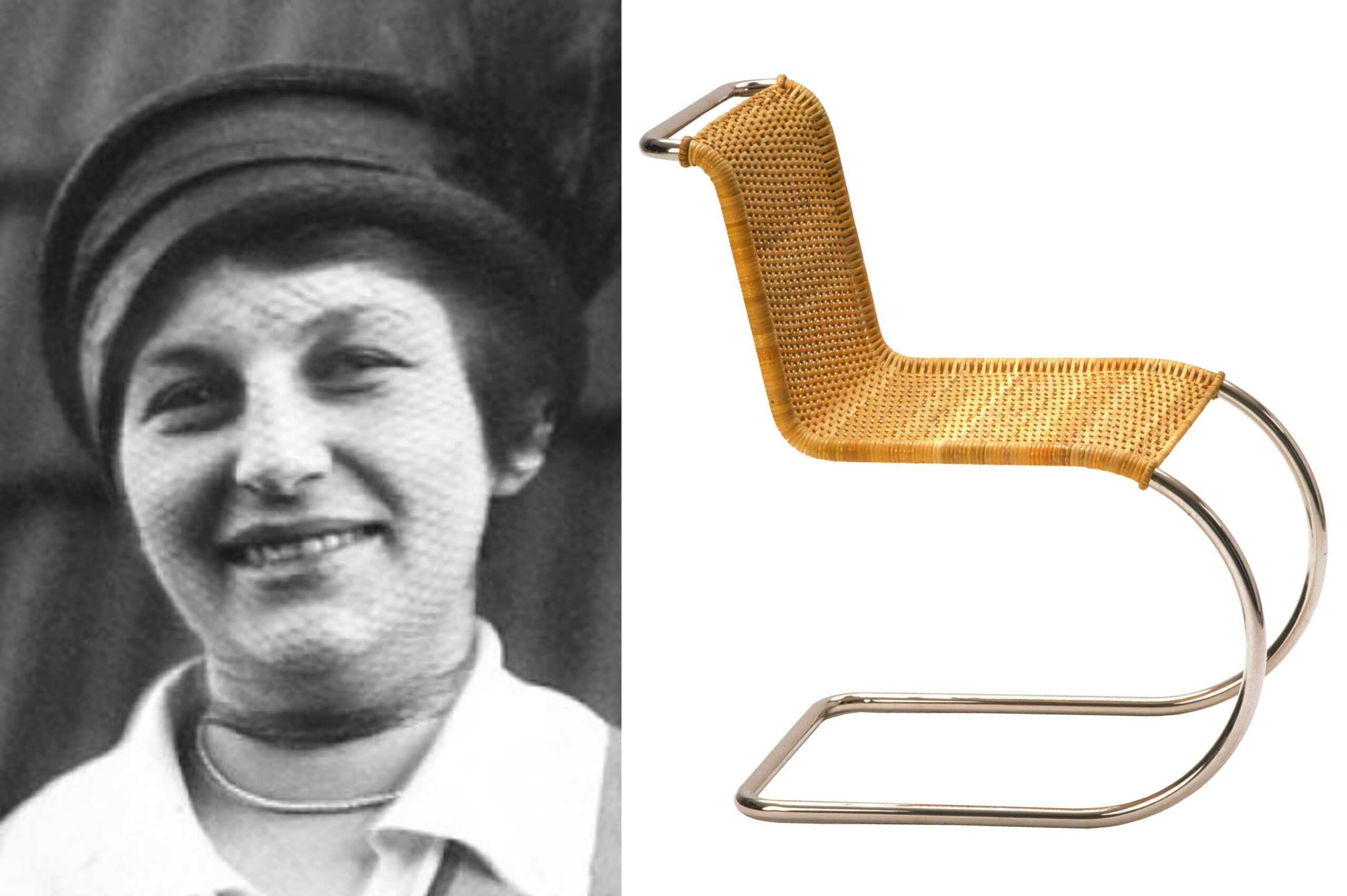
Lilly Reich & Weissenhof chair by Lilly Reich and Mies van der Rohe | 1- design TOP 100, CC BY-SA 3.0 , via Wikimedia Commons | 2- Hiermit erkläre ich in Bezug auf das Bild B 42.jpg (Weißenhof-Stuhl), dass ich der Fotograf oder Inhaber des ausschließlichen Nutzungsrechts bin. Ich erlaube, das Bild unter der freien Lizenz Bild-UN zu veröffentlichen.Mir ist bekannt, dass damit in urheberrechtlicher Hinsicht Dritte das Recht haben, das Bild gewerblich zu nutzen und zu verändern.Mir ist bekannt, dass ich diese Einwilligung üblicherweise nicht widerrufen kann und kein Anspruch darauf besteht, dass das Bild dauernd auf der Wikipedia eingestellt wird.Mir ist bekannt, dass sich die Unterstellung unter eine freie Lizenz nur auf das Urheberrecht bezieht und es mir daher unbenommen ist, aufgrund anderer Gesetze (Persönlichkeitsrecht, Markenrecht usw.) gegen Dritte vorzugehen, die das Bild im Rahmen der freien Lizenz rechtmäßig, auf Grund der anderen Gesetze aber unrechtmäßig nutzen.16.02.2007, Christian Drescher (TECTA OHG), Public domain, via Wikimedia Commons
Marianne Brandt: The Woman Who Broke Into Metal
The metal workshop was considered one of the Bauhaus’s most prestigious and it was almost exclusively male. Marianne Brandt walked in anyway.
Initially met with resistance from her peers, she pushed through and eventually became the workshop’s acting director. Her output was remarkable: the Kandem bedside lamp, designed in collaboration with Hin Bredendieck, became one of the most commercially successful products the Bauhaus ever produced. Her ashtrays, tea sets, and light fixtures combined geometric form with usability, creating objects that felt inevitable, as if they couldn’t have been designed any other way.
Brandt understood that industrial design wasn’t about imposing aesthetics onto function. It was about finding the form that function had always implied. That discipline — rigorous, unsentimental, attentive — is exactly what separates enduring design from decoration.
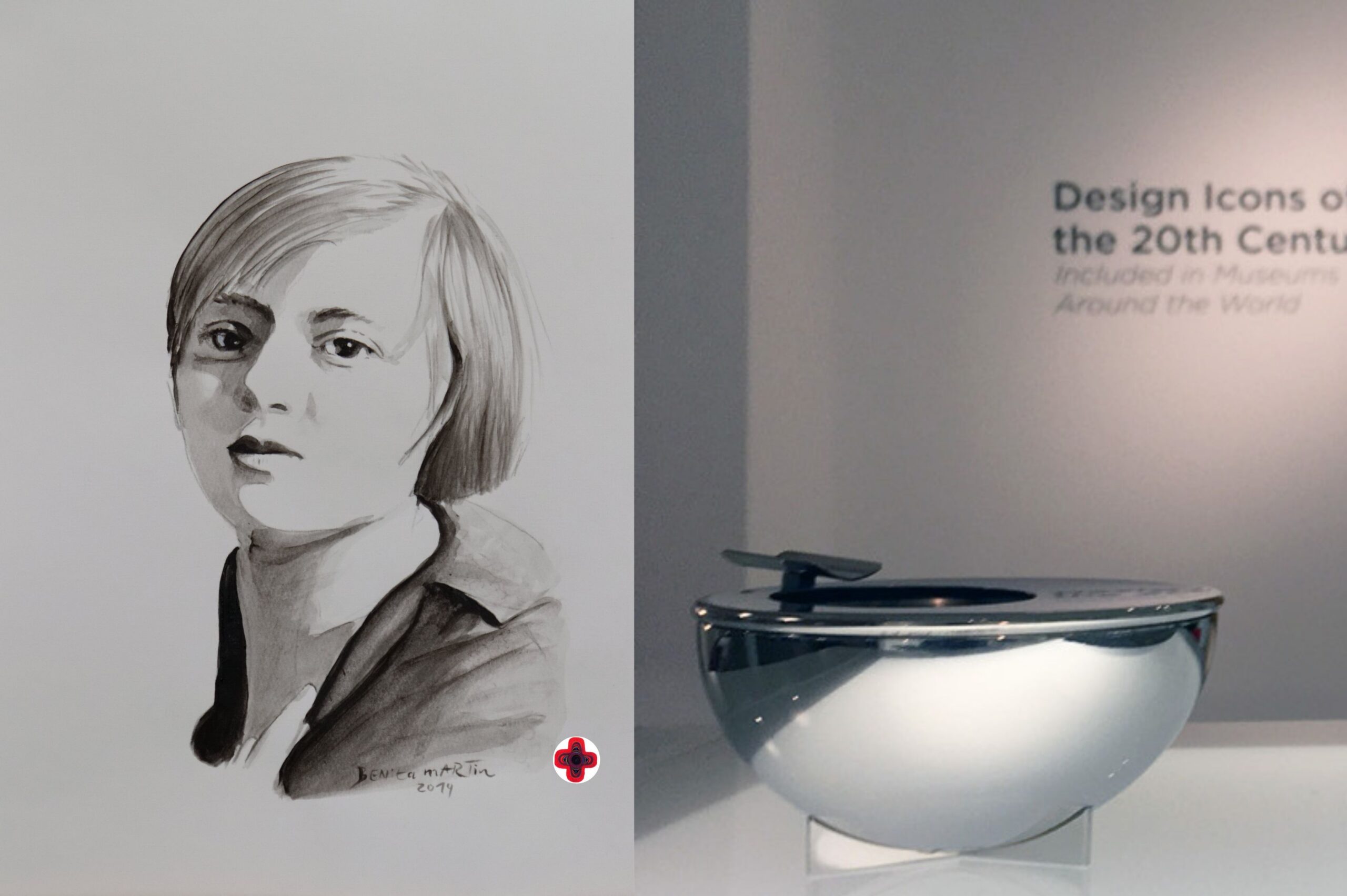
Marianne Brand & Marianne Brandt's Ashtray (1924) | 1- Benita Martin, CC BY-SA 3.0 , via Wikimedia Commons 2- Dedalo1972, CC BY-SA 4.0 , via Wikimedia Commons
The Ideas Outlasted the Erasure
The women of the Bauhaus were working within systems designed to minimize their contributions. Some were redirected, some were credited as collaborators when they were co-authors, and some were simply written out of the record.
But their ideas persisted, and their formal intelligence and understanding of how space, material, and human experience connect is woven into the foundations of modern design.
Great architecture has always come from those who pay close attention to how people actually inhabit space. Who treat every surface, every threshold, every material decision as meaningful, and refuse to separate beauty from use.
That’s Bauhaus value. And it’s one the women of the Bauhaus understood, perhaps more deeply than anyone.


