
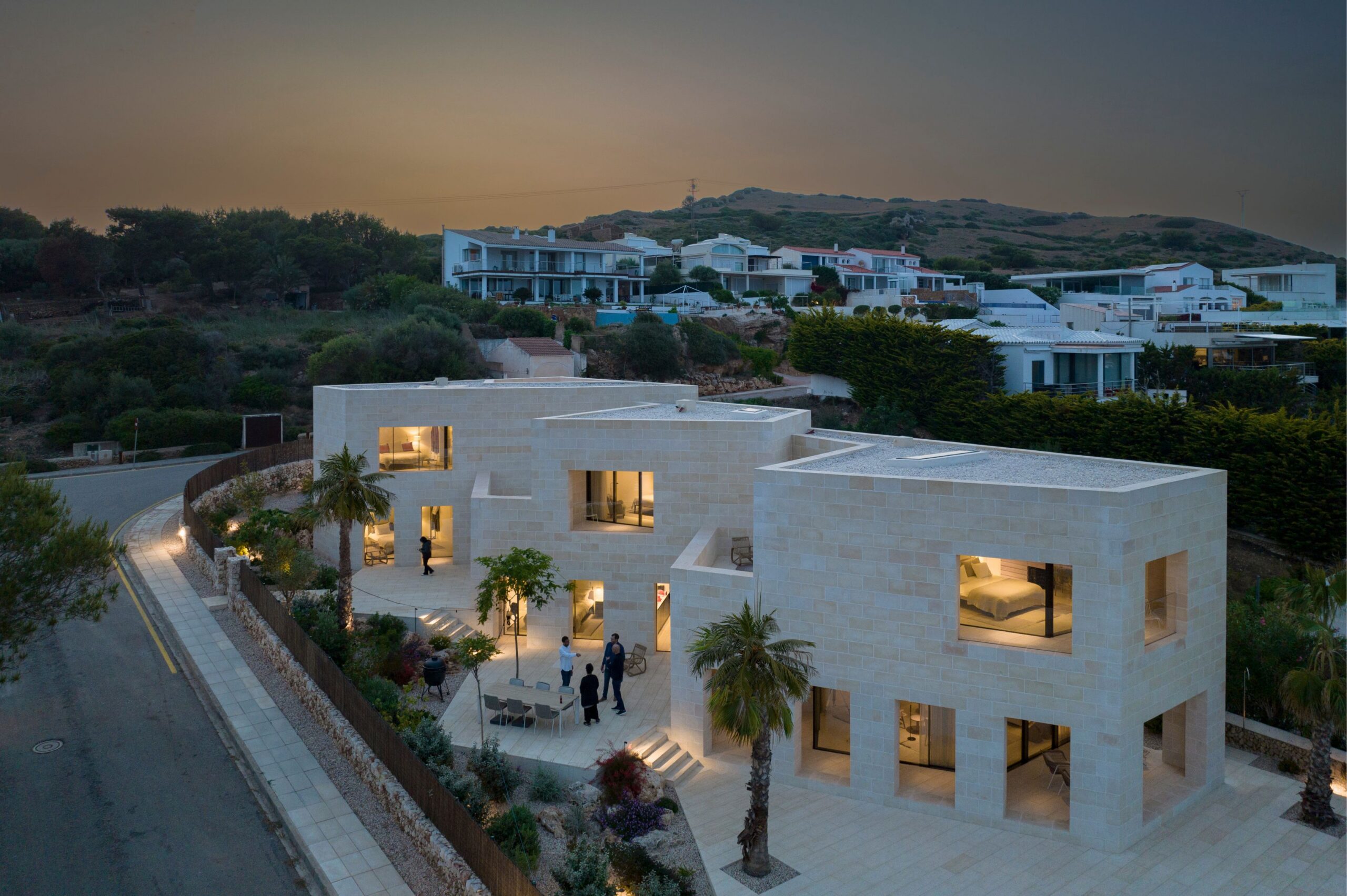
Set along the Mediterranean waterfront, Onze House, designed by architect Clara Solà-Morales, reflects an approach guided by light and place. It is a carefully articulated sequence of spaces that allows the inhabitant to feel immersed in the landscape while remaining sheltered, comfortable, and protected.
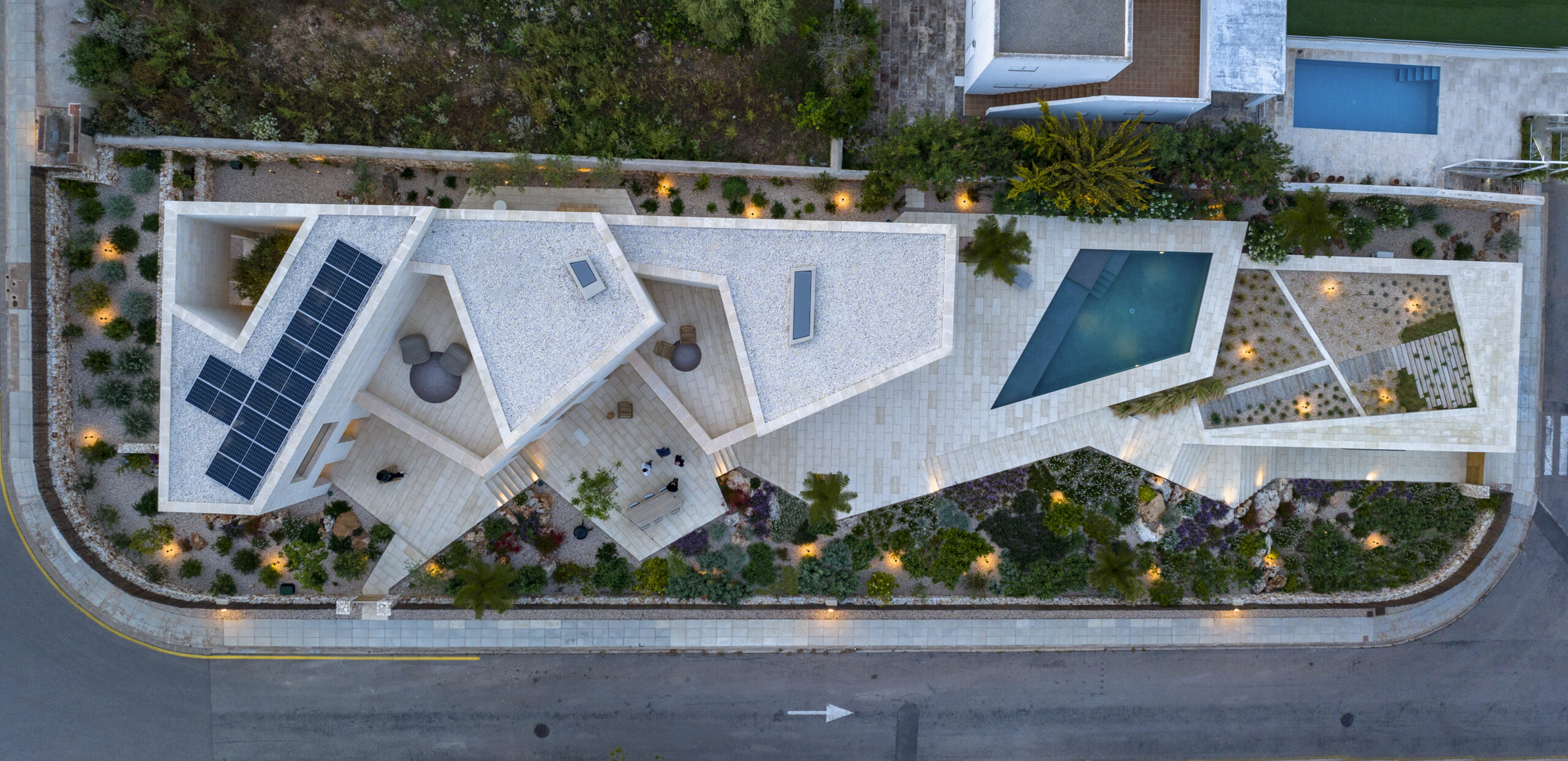
The project responds directly to the site’s topography and morphology. The plot is long and narrow, formed by the union of two parcels and bordered by neighboring buildings of considerable height. What could have been a constraint becomes a driver for the architectural concept: Onze House opens itself like a fan, unfolding diagonally toward the sea to multiply frontal and oblique views and ensure visual connection from nearly every space.
A Composition of Volumes and Shadows
The house is organized into three distinct volumes that adapt to the natural terrain. This fragmentation avoids excessive proportions and creates a dynamic composition of solids and voids, light and shadow.
These volumes rest on a continuous opaque wall that defines the façades facing future neighbors, ensuring privacy while structuring the interior program in a comb-like layout. The result is a house perceived not as a single object, but as a succession of autonomous bodies, each responding to the terrain and daily life.
Shadow is a defining element of the project, intentionally designed to shape comfort, atmosphere, and spatial experience.
© Sandra Pereznieto
Interior–Exterior as a Continuous Experience
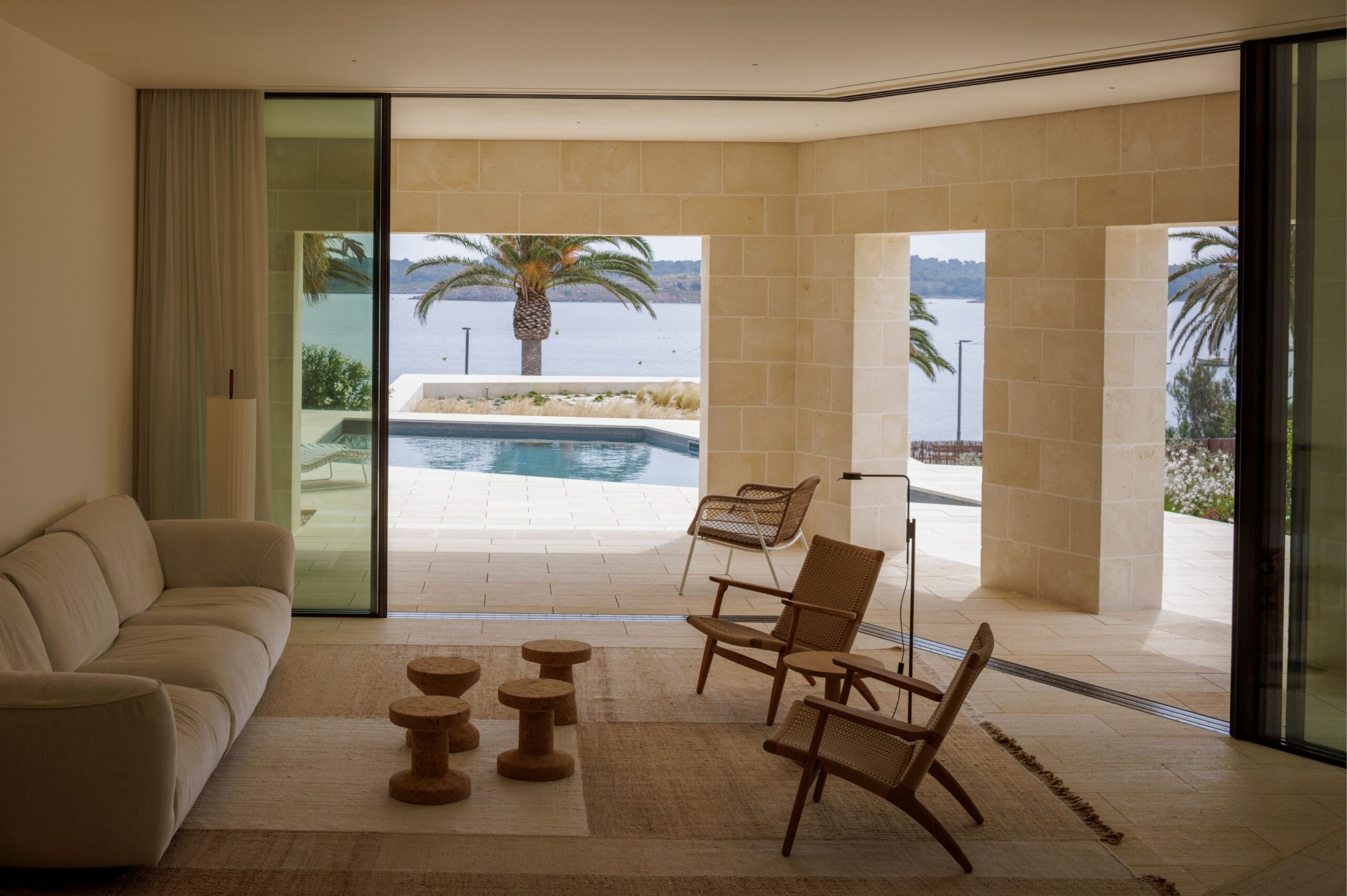
At the heart of Onze House lies a fluid transition between inside and outside. The interior spaces are conceived as a sequence of continuous environments, scaled according to use and organized around two main anchors: a protected backyard connected to the vertical core and a living room that opens fully onto a large front terrace facing the sea.
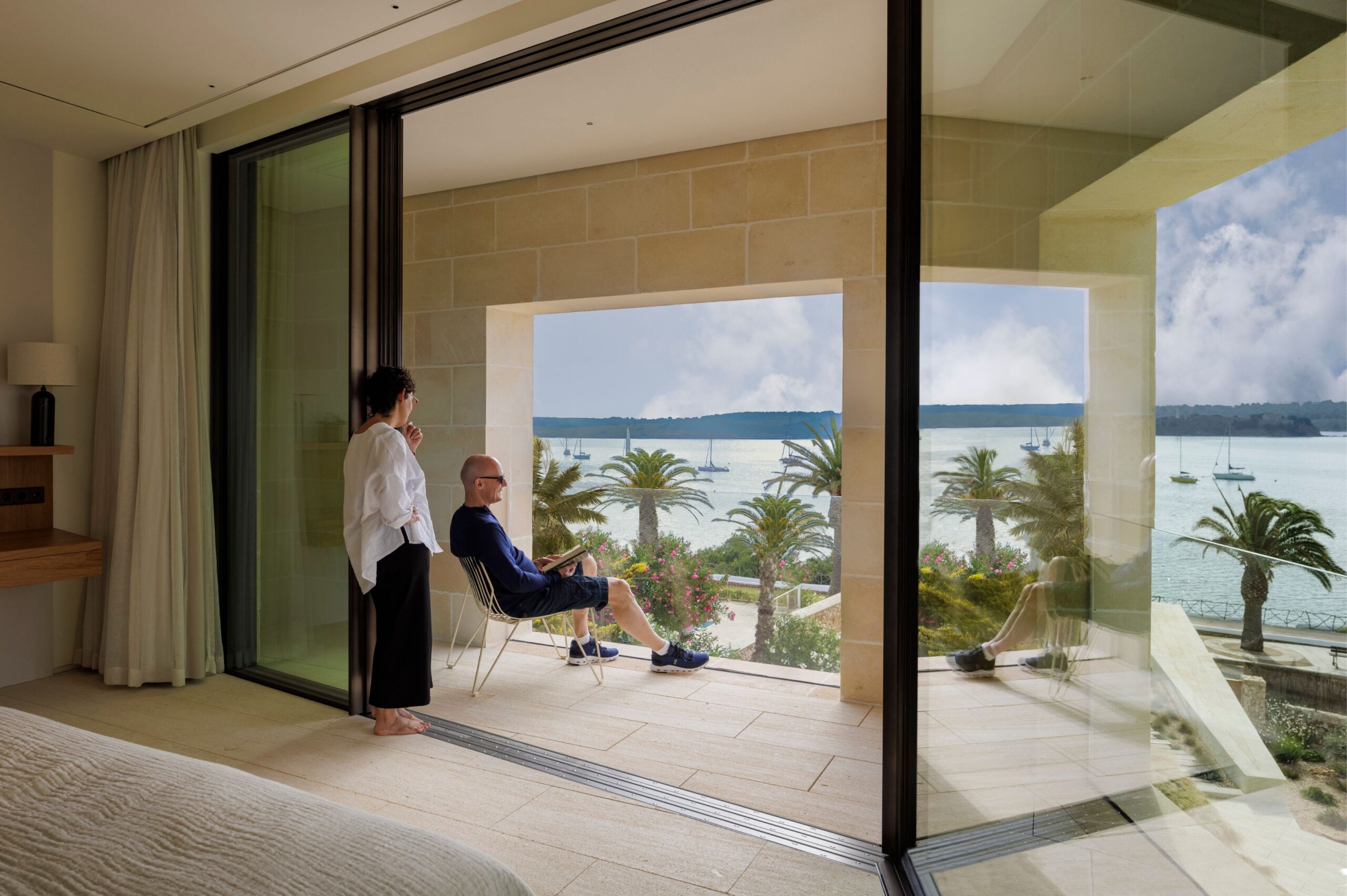
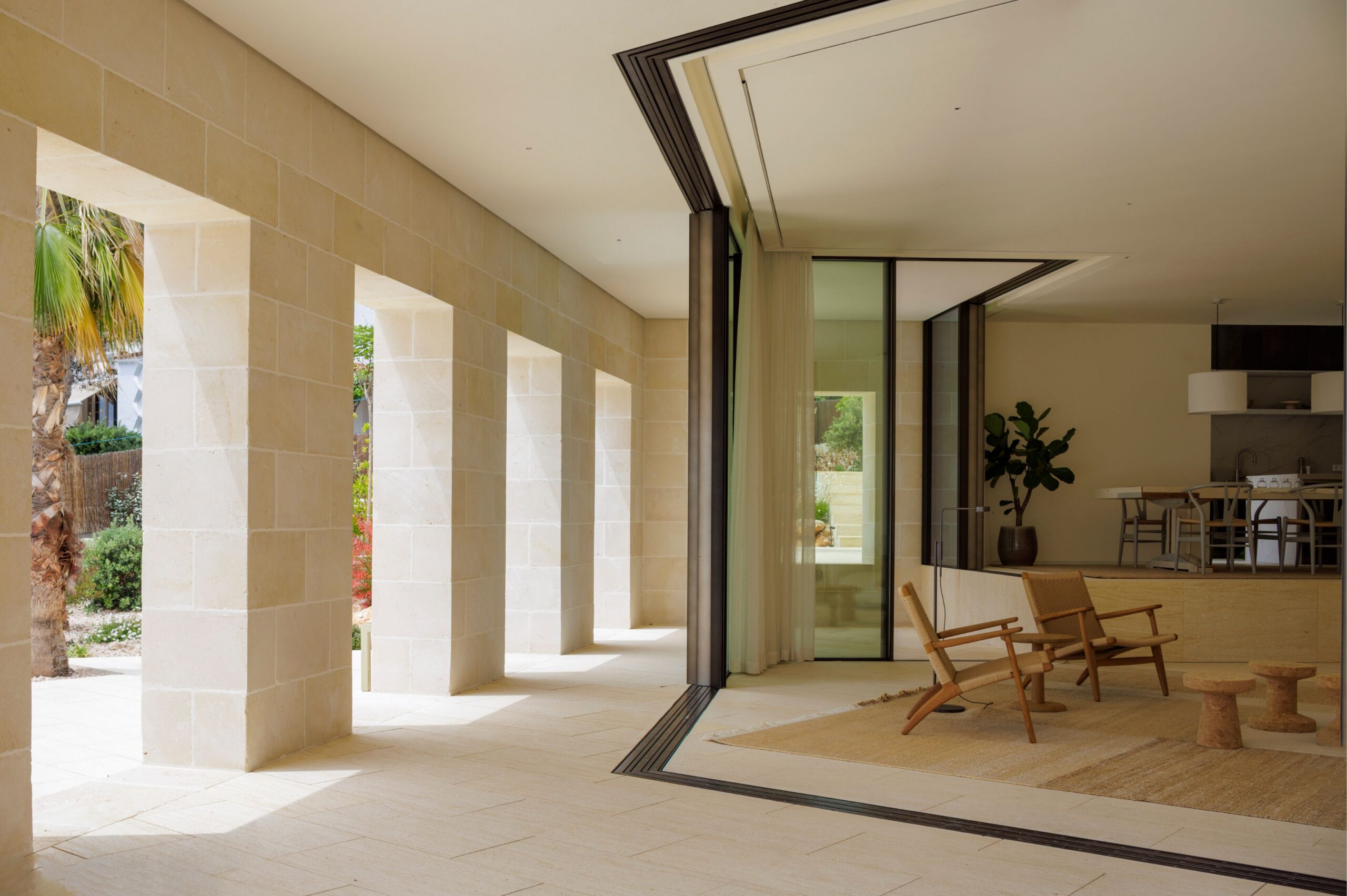
To reinforce this continuity, the project introduces a double-skin façade on the front elevation. The inner skin, made entirely of glass, is independent from the outer one, allowing interior spaces to extend visually into shaded exterior thresholds. These intermediate spaces are neither fully inside nor outside—they are places to inhabit, protected from direct sun while remaining open to the landscape.
When fully opened, the sliding glass panels disappear into the walls, leaving behind a clean, uninterrupted opening where architecture steps back and the view takes precedence.
Precision That Serves Architecture
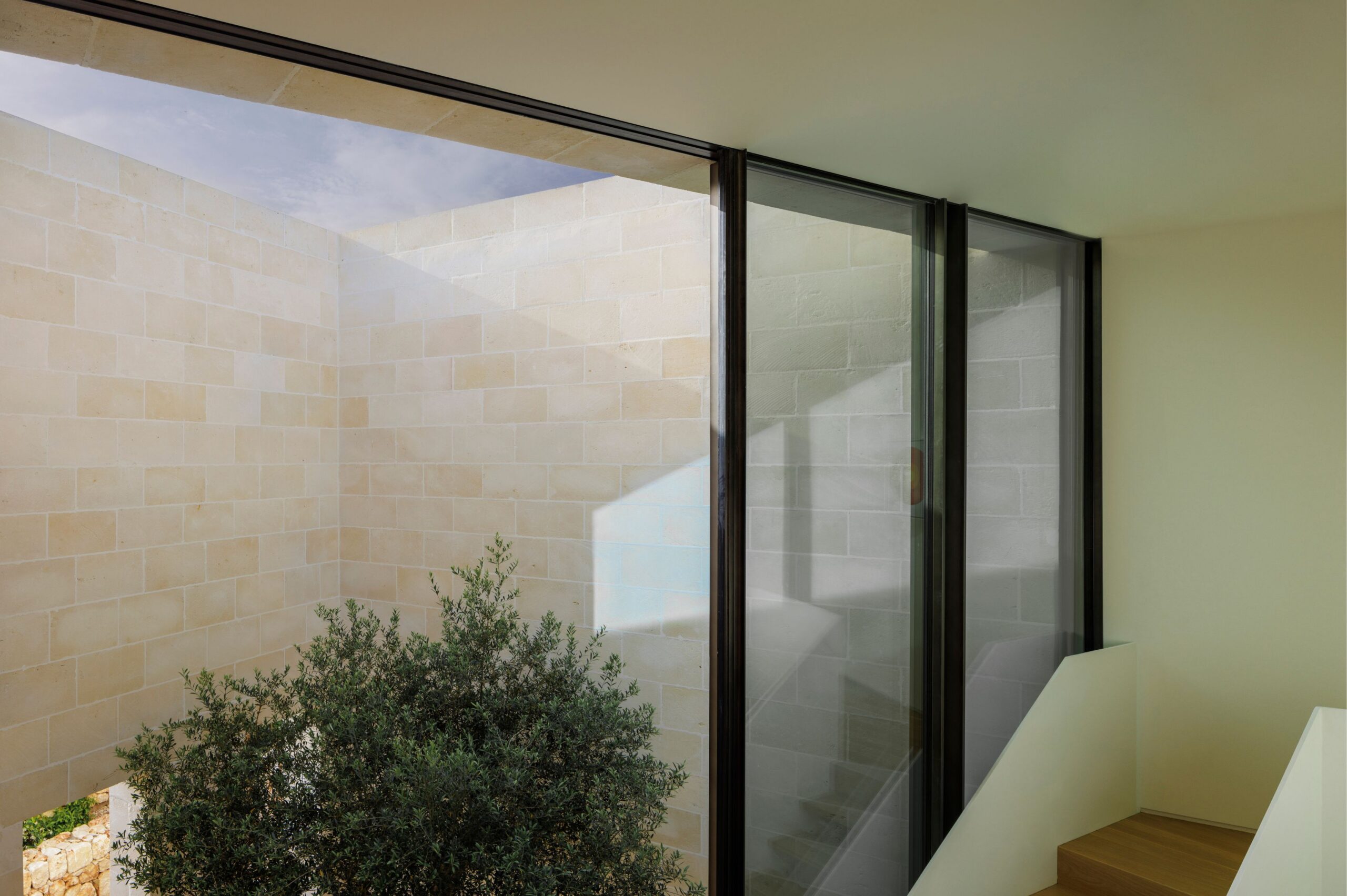
One of the greatest technical challenges of Onze House was resolving large openings that span two different floor heights without introducing elements that could disrupt the clarity of the space.
This is where OTIIMA Plus plays a defining role.
The system’s minimal, flush profiles allow the pavement to remain continuous between interior and exterior, dissolving the physical boundary between the two. The track is fully integrated into the wall and complemented by an insulating panel that guarantees high thermal and acoustic performance—essential in a project where openness must coexist with comfort.
The result is an integration that feels natural, almost invisible. Windows do not compete with the architecture; they support it. When open, they vanish. When closed, they remain discreet, allowing stone, wood, light, and landscape to define the space.
© Sandra Pereznieto
1. Heydar Aliyev Center – Zaha Hadid
1. Heydar Aliyev Center – Zaha Hadid
Material Integrity and Local Craft
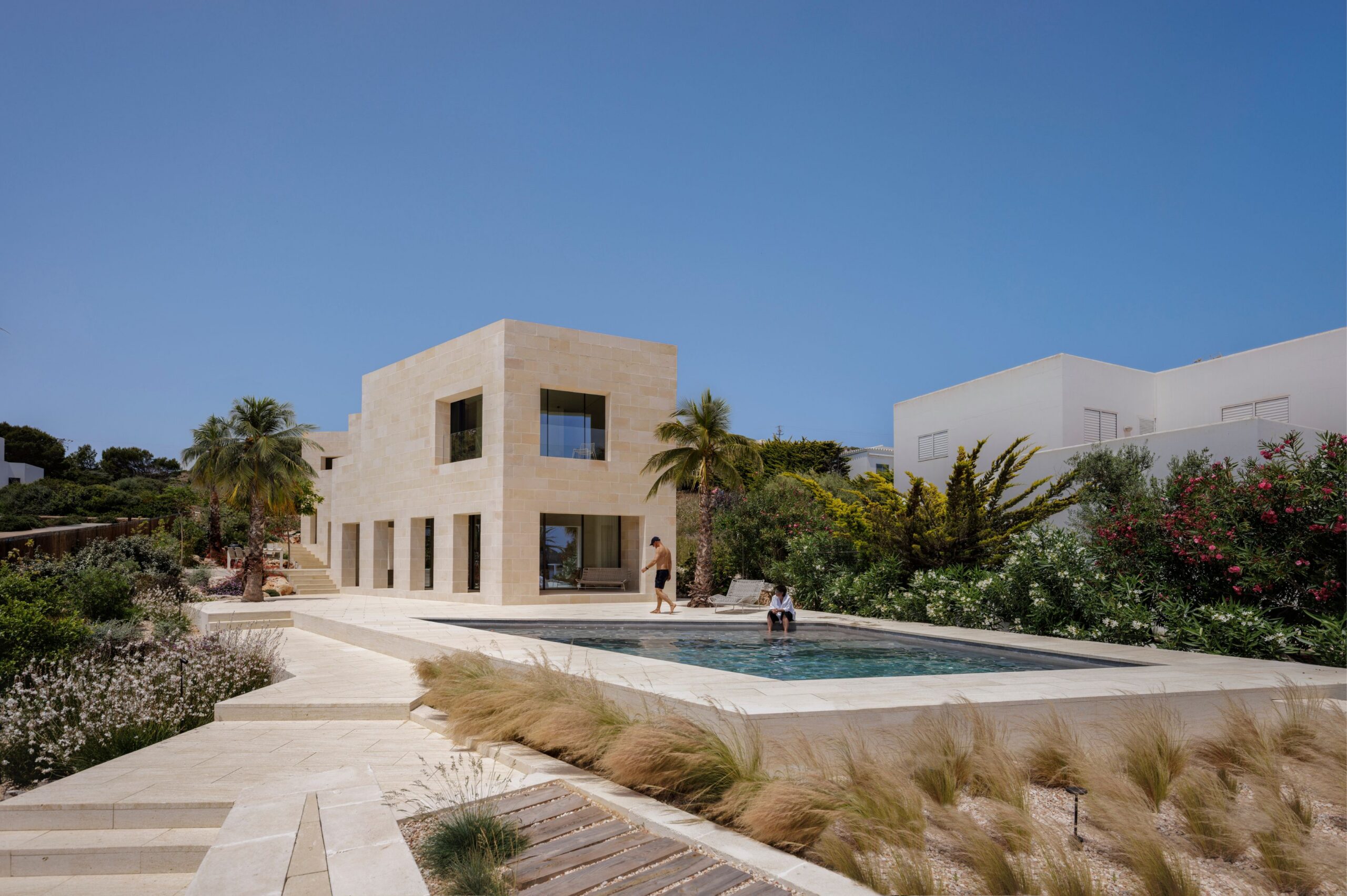
Onze House is deeply rooted in its context through material choice. The envelope is built from “mares,” the local stone, used in thick, high-mass layers that give the house a sense of permanence, abstraction, and thermal inertia. Solid, geometric, and tactile, the stone reinforces the project’s relationship with place.
Remarkably, the entire stone envelope was executed by a single craftsman, using a material-specific metric and guided by deep knowledge of its geometry. This approach brings a human scale and authenticity to a house that is otherwise rigorously architectural.
The flooring, in tones similar to the stone, unifies interior and exterior surfaces. Terraces form horizontal platforms upon which the volumes rest, while vegetation emerges at their edges, gradually softening orthogonal boundaries and blending architecture into the surrounding landscape.
© Sandra Pereznieto
Architecture That Steps Aside
Onze House reflects a deliberate architectural approach in which context guides every decision, from the diagonal organization of space to the material weight of the stone walls.
Projects like this show that true luxury in architecture comes from thoughtful solutions that improve the experience while remaining almost invisible.
When architecture, materials, and technology align, the landscape becomes part of the experience.


