
Arena Liga Portugal | OODA | © Pedro Cardigo
Architecture Inspired by the Spirit of Football
The design centers on two main architectural features.
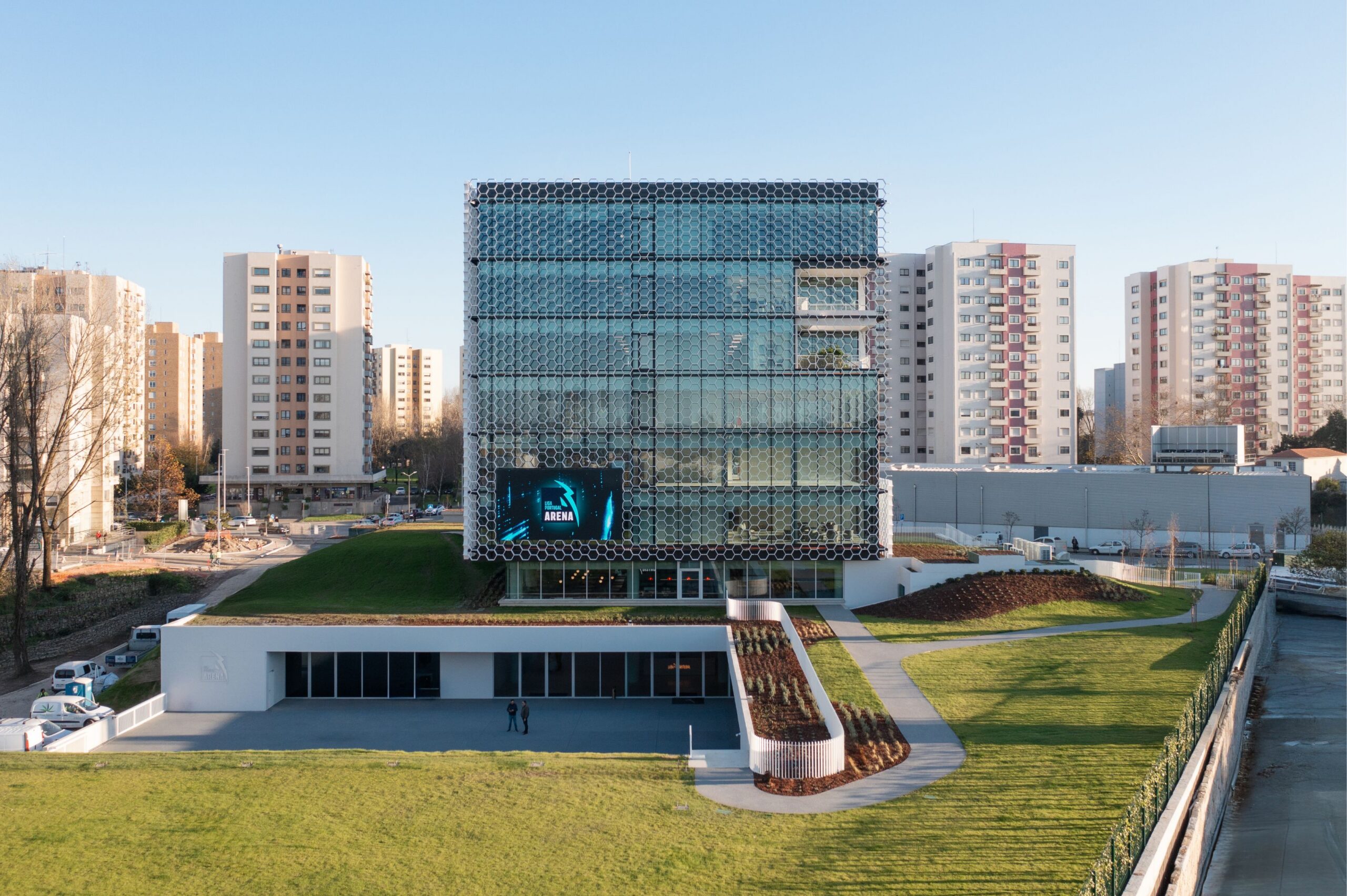
At the ground level, a green podium stretches out from the landscape, forming a public space that links visitors to the building and the nearby city. The planted roof continues in the park, making it hard to tell where the building ends and nature begins, and inviting people to explore and move around.
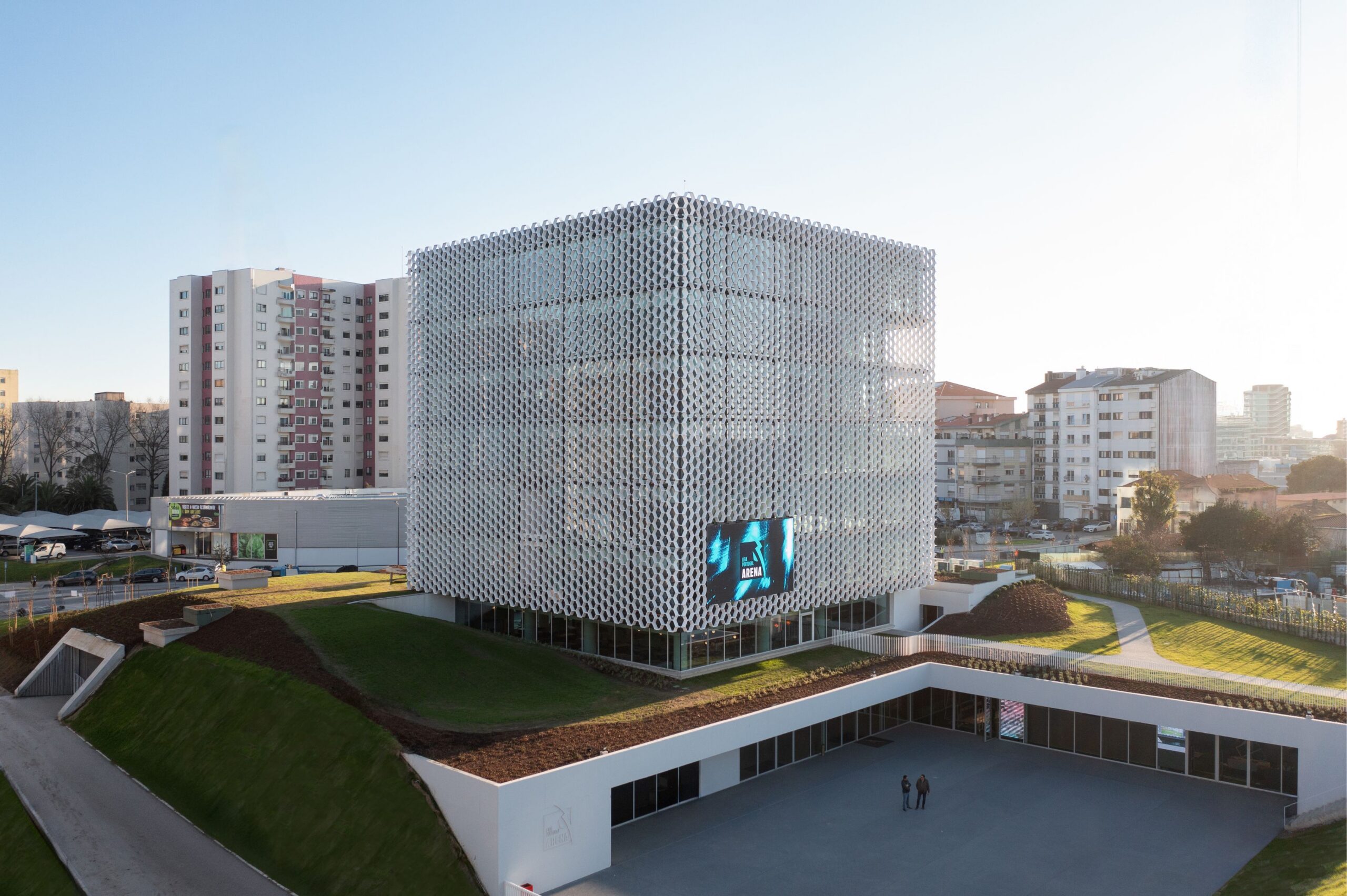
Above the podium, a suspended cube holds Liga Portugal’s offices, research areas, and training rooms. Covered in a bold hexagonal pattern, this part of the building stands out in Porto’s skyline. Its shape hints at football by recalling the surface of a ball and the net of a goal but does so in a subtle way rather than copying them directly.
This approach creates a building that expresses its identity in an abstract way. It stands out visually but still looks elegant and understated.
The Hexagonal Façade: A Dynamic Architectural Envelope
One of the project’s most distinctive features is its hexagonal façade system, developed by Artworks.
The white honeycomb structure surrounds the glass building, adding layers that perform aesthetically and serve a purpose. During the day, it filters sunlight and brings depth, texture, and shadow to the building. At night, the lights inside turn the tower into a glowing landmark, making it stand out in the city.
Beyond the visual aspect, the façade helps the building use less energy by blocking some sunlight but still letting in daylight and keeping the space open. This mix of openness and protection is key to the building’s design.
Light becomes an active material, constantly changing the façade’s perception throughout the day and across the seasons.
Transparency as an Architectural Strategy
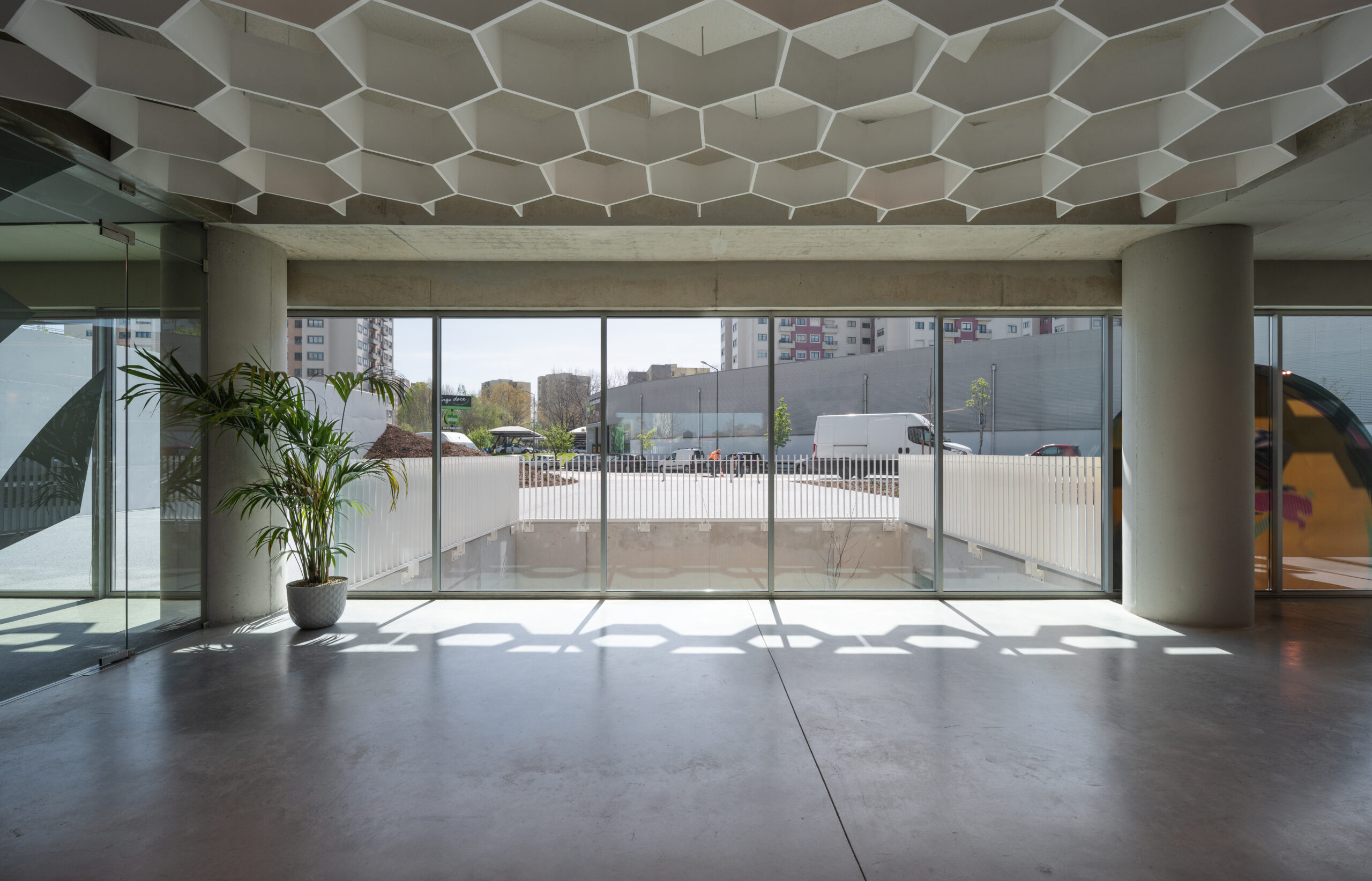
Extensive glazing behind the hexagonal screen is a key part of the project’s identity.
OODA designed the building as a translucent space that connects visually with the city. The large glass areas let in more natural light, improve the feel of the space, and make it more open, which matches the institution’s goal to connect with the public.
This design needed glazing systems that could provide large glass surfaces with as few visual breaks as possible.
Arena Liga Portugal | OODA | © Pedro Cardigo
OTIIMA 38 Plus: Minimal Frames, Maximum Vision
To support this vision, the project incorporates OTIIMA 38 Plus minimal frame systems.
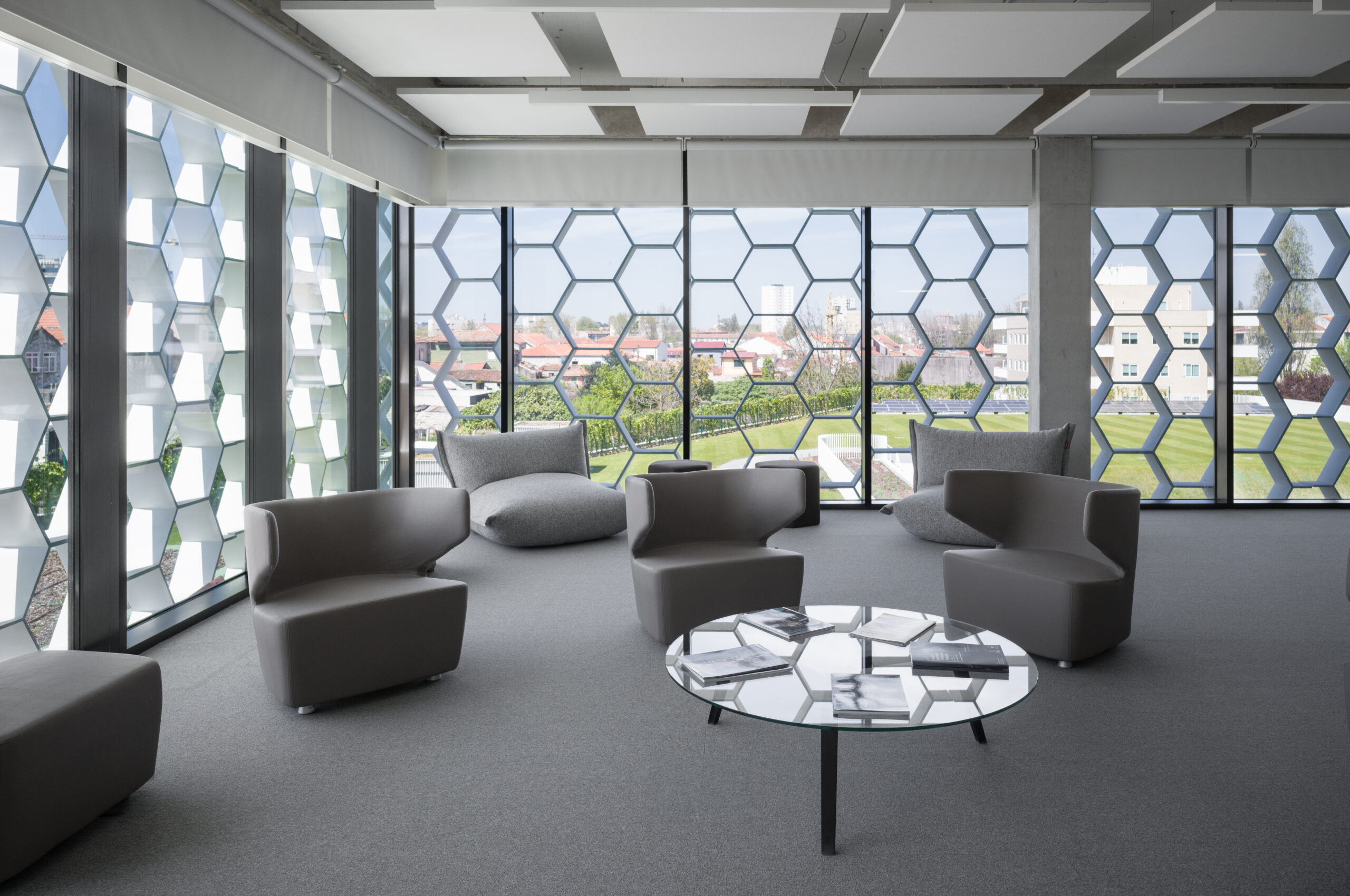
OTIIMA 38 Plus reduces visible aluminum and increases transparency, allowing the design to highlight light, proportion, and the surrounding landscape instead of the frames. Its slim lines keep the building’s shape clean and maintain clear views between inside and outside.
In Arena Liga Portugal, these minimal frames improve offices and shared spaces by letting in more daylight and strengthening the connection to the landscape outside.
This creates a façade that looks lighter, more transparent, and more aligned with the project’s architectural ambition.
Monumental Entrances with OTIIMA Pivot Doors
OTIIMA Pivot Doors work with the glazing strategy to highlight the main entrances of the building.
The large pivot doors give the building a sense of scale and permanence suited to its national importance. Their simple design fits the rest of the façade, so the entrances look elegant and understated while still impressing visitors.
These pivot systems combine strong technical performance and careful design, supporting the project’s focus on simplicity, usefulness, and fine details.
Arena Liga Portugal | OODA | © Pedro Cardigo
A Building that Connects City, Community, and Culture
Arena Liga Portugal was designed not just for its architecture but as a community space.
The building offers public spaces such as exhibition halls, an auditorium, event areas, and sports facilities. Rather than being a typical headquarters, it has become a lively part of the city. The public square, gardens, and open outdoor areas invite people to connect, enjoy football culture, and engage with the city.
This mix of uses reflects a larger trend in modern architecture. Buildings like this are now places where people meet, share ideas, and participate in the community.
Architecture & Performance
Arena Liga Portugal shows how a building can express its identity while also meeting environmental, urban, and practical needs.
OODA’s design, the unique hexagonal façade by Artworks, and the use of OTIIMA 38 Plus systems and Pivot Doors work together to balance openness, function, and style. The building uses light creatively, helps people feel connected, and stands out as a new landmark in Porto.
Arena Liga Portugal shows what the future of public buildings can be: open, sustainable, and closely linked to city life.


