
Steep terrain resists control. It changes how we think about building, moving the focus from taking charge to working with the land. Architects face a fundamental decision: change the land for the building or let the building fit the land.
More often, architects today choose to let buildings adapt to difficult sites. Using gentle methods means reducing excavation, preserving ecological systems, and revealing forms that are inseparable from their surroundings. Instead of flattening complexity, they work with it.
Here, design is more about understanding the land. Architects follow the land’s lines, respect its slopes, and let the building’s form grow from these limits.
Minimal Intervention as a Design Principle
Traditional construction on slopes typically begins with heavy earthwork, including clearing, backfilling, constructing retaining walls, and grading. However, this approach disrupts natural drainage and alters terrain stability.
The non-invasive design reverses this logic, based on the idea that the terrain should remain virtually intact. Each decision is evaluated based on its impact, such as the amount of soil moved, the number of trees removed, and how water continues to flow.
Recent discussions in the field of architecture show that extreme topography can inspire creative design solutions rather than being a problem to be solved.
Building Lightly on the Ground
One of the most straightforward responses to a steep site is to minimize contact with the ground.
Buildings constructed on piles or point foundations only touch the ground where necessary. This allows the slope to continue beneath the building, helping to protect vegetation and maintain the natural flow of water.
The architecture appears to float, anchored without dominating the site. This structure also connects the interior space to the surrounding terrain, making the site appear as a continuous surface.
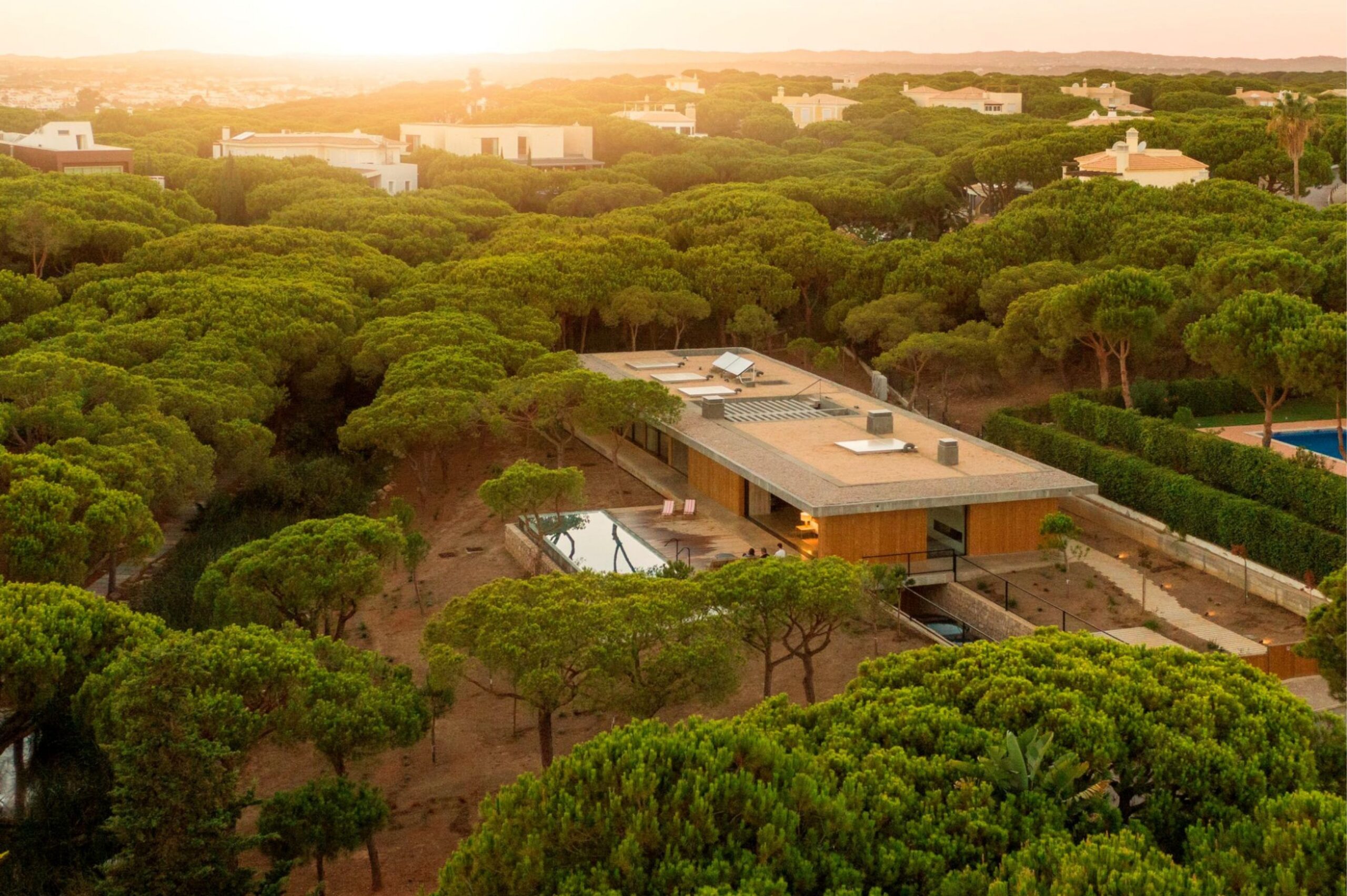
Praia Verde House | Atelier Central | © Fernando Guerra
Stepping with the Slope
Buildings tracing the contours of the land transform the terrain into a series of spaces. Each level marks a shift in elevation, forming platforms, terraces, and steps.
This approach eliminates the need for large retaining walls and reduces excavation, allowing for the creation of a space that is intimately connected to the way people move through the landscape. The building conveys a sense of gentle circulation as one ascends or descends, always following the natural shape of the terrain.
The latest houses built on slopes demonstrate how stepped designs preserve the natural slope and create fluid interior spaces.
Spanning the Landscape
Under certain conditions, the ground must not be disturbed.
Ravines, dense vegetation, and fragile ecosystems require a different approach: transposition. In this way, interventions such as bridges, flyovers, and elevated structures allow architecture to cross the land without changing it.
Here, the structure becomes the sole point of contact. The building behaves less like an object placed on the ground and more like an extension that traverses it, connecting points in space without occupying everything in between.
Paradoxically, some of the most structurally ambitious solutions result in the least disturbance to the ground itself.
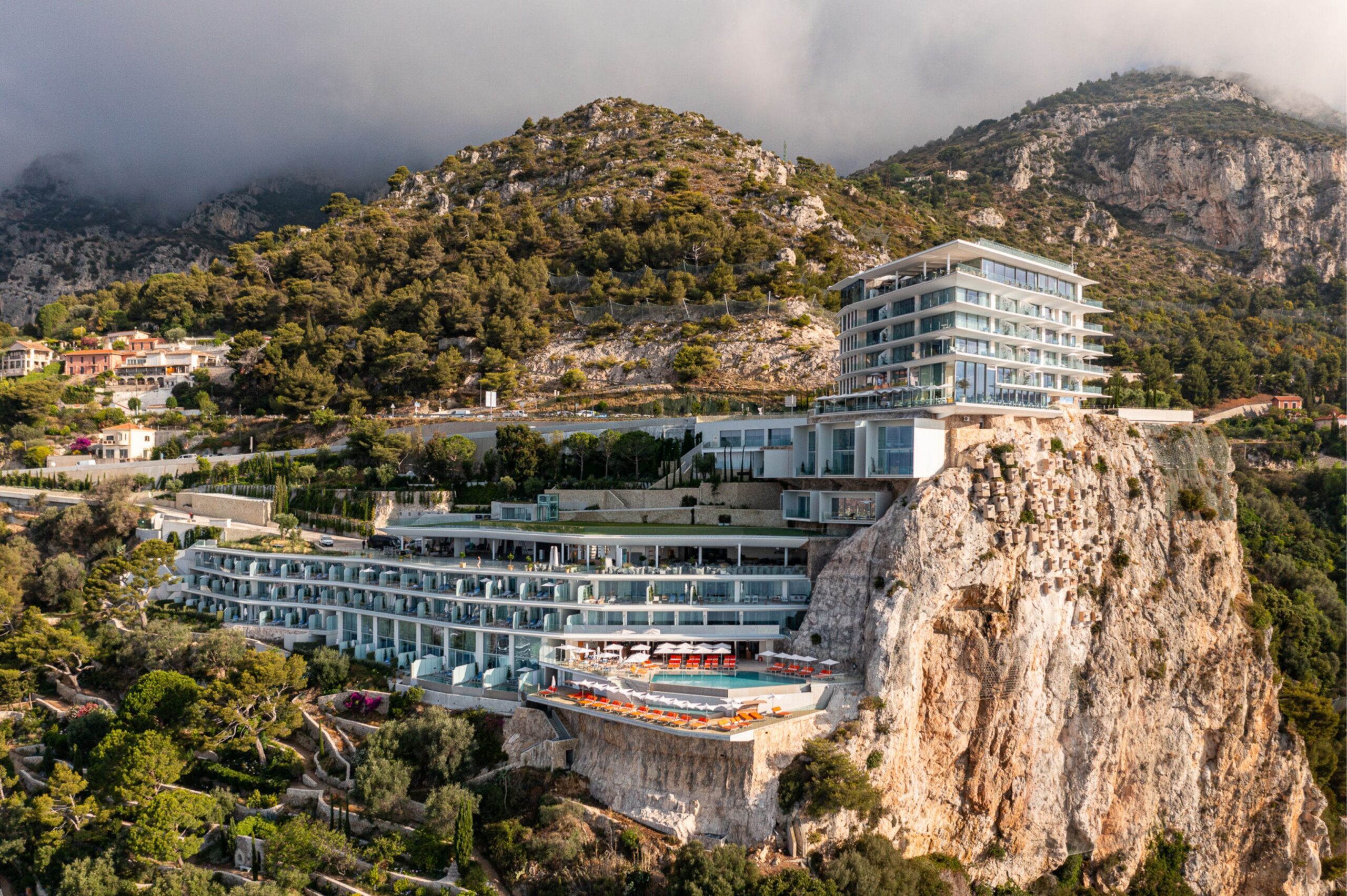
Maybourne Rviera | Wilmotte & Associés Sas-d’Architecture | © We are contents
Vertical Concentration
When building outward is not possible, architects design upward instead.
Vertical cores and compact towers help reduce the building’s footprint and limit ground disturbance. On steep sites, stacking spaces on top of each other is not just efficient, it also makes sense. Each floor matches a different elevation, often taking advantage of views, access, or natural light.
The building sits within the landscape, and its hallways and stairs connect the ground to the upper levels.
This approach works especially well on sites with many limits, where keeping the natural shape of the land is important.
Fragmented and Distributed Forms
Not all sites can be resolved with a single volume.
In complex topographies, fragmentation becomes a strategy of precision. Instead of one large structure, multiple smaller pavilions are placed across the site, each positioned according to local conditions.
This approach minimizes grading and allows architecture to occupy natural clearings without altering them. It also creates a more intimate relationship between building and landscape, where movement between volumes becomes part of the architectural experience.
The result is not a singular object, but a constellation of spaces embedded in terrain.
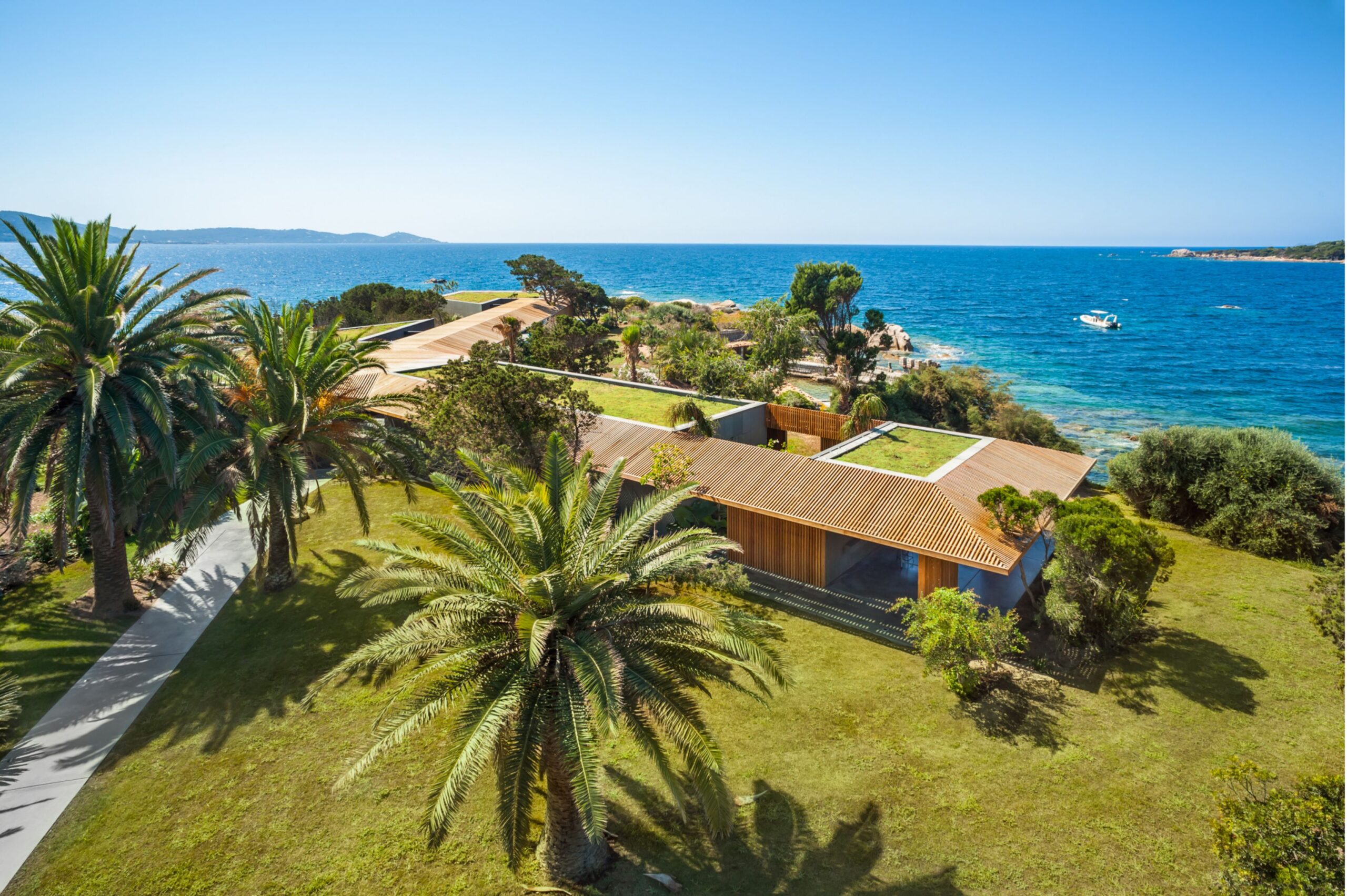
Villa H2 | Vicent Coste | © Florent Joliot
Designing with Constraint
No matter the strategy, one thing stays the same: constraint is a way to find clarity.
Steep terrain means you cannot stay neutral. Every decision stands out, whether it is structural, spatial, or environmental. Here, non-invasive design is a careful discipline.
As climate awareness and ecological responsibility change what matters in architecture, designs that minimize intervention will continue to shape the most important work on sensitive sites.
The landscape is no longer a surface to build on. It is a system to build with.
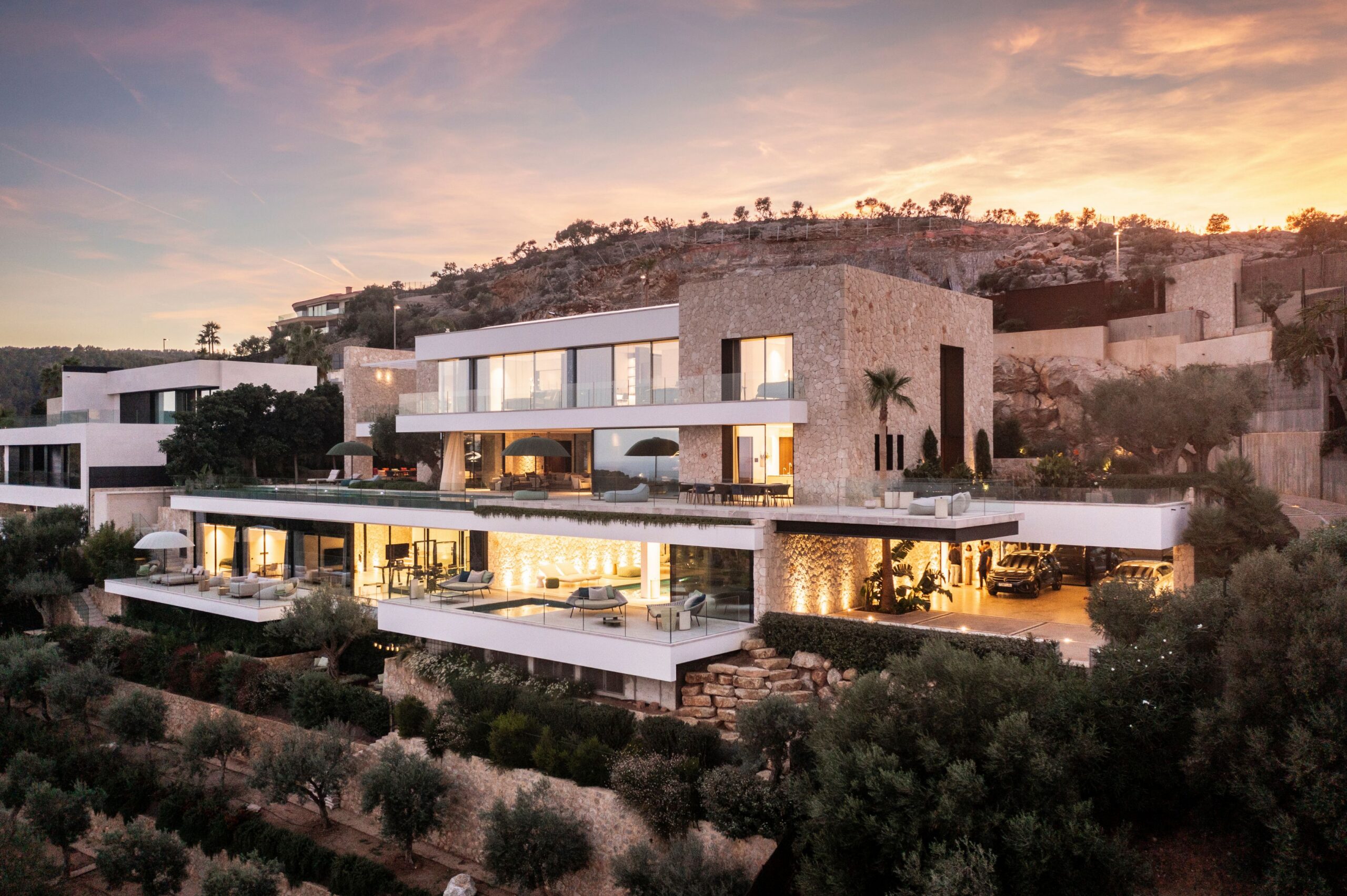
AL08 House | Estudio Cano | © Tomeu Canyellas


